From the Lab, News
Monday, October 9, 2023
Takeaways from Roasters Guild Retreat 2023
Emma Taylor, Quality Control Manager &Outbound Logistics Manager at Sustainable Harvest and first-time Coffee Roasters Guild Retreat (CRGR) attendee, shares her insights from the recent CRGR.
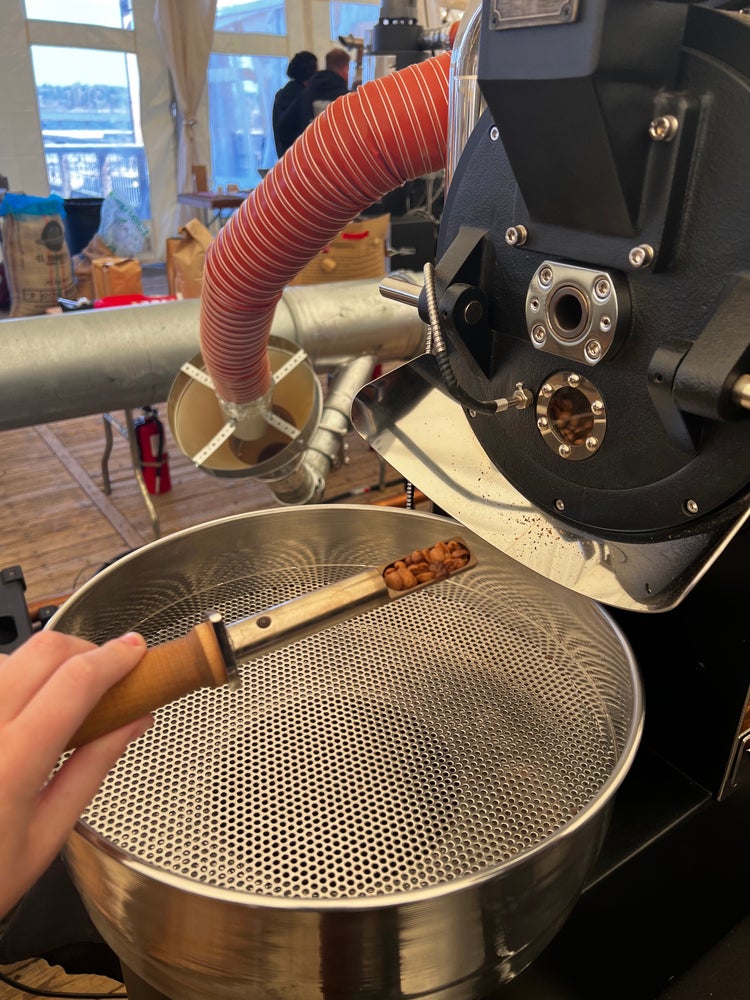
This year at Coffee Roasters Guild Retreat was unlike any year prior. There were more first-time participants at the event than ever before. An overwhelming number of next-generation coffee roasters, green buyers and traders all gathered together for four days of connection, cupping and collaboration.
A strong focus on teamwork sets this event apart from other coffee industry events. Participants are randomly assigned a group of peers and provided the time and space to collaborate. At larger gatherings and expos, we tend to flock to names and faces we already know, and we may not speak at length or share meals with the new faces we meet. At the Coffee Roasters Guild Retreat, creating connection is inevitable, and these connections extend beyond the retreat into real-life friendships and professional relationships. It was profoundly evident that the next generation of coffee professionals are coming into their own and want to make a difference in the way they source, purchase and roast green coffee.
It speaks volumes about the direction we are headed that this year’s roasting challenge was focused on utilizing past crop coffees as core blend components. In the coffee industry, we work with a product that begins to degrade the moment it is harvested and yet it can take 6 or more months to actually arrive on the production floor and be prepared for consumption. So, it is unrealistic for us to expect to never feature past crop coffees on our menus.
And yet, more often than not, the general consensus regarding past crop coffees is that they will always taste baggy, papery and aged.
The distinction between “past crop” and “aged” is an important one. This was made very clear during an eye-opening lecture and exercise about the green coffee lifespan. The exercise demonstrated how “past crop” does not necessarily mean old. Past crop coffees can still add value to menus as blend components, even if they aren’t as vibrant in their expression of sweetness and acidity as their fresh crop counterparts. This is especially true of differentiated preparations of green coffee, such as honeys or naturals.
In a cupping exercise, groups of cuppers evaluated two sets of coffee spanning three crop years — one set was a washed coffee, and the other an anaerobic natural. We found that, while both coffees presented some evidence of degradation, neither tasted particularly harsh or aged, even though it had been three years since this coffee would have been considered fresh by industry standards. In addition, the anaerobic processing seemed to add extra “insurance” to the bean, providing added organic compounds which take more time to break down in storage. This was an important exercise on subjectivity, and how quick we are to judge a coffee as aged before even cupping it, based solely on extrinsic information.
As climate change and economic instability have begun to affect the way our supply chain grows, produces and purchases green coffee, it has become more and more important for us to shift our attitude surrounding past crop coffees.
When we weren't roasting or cupping, the lectures introduced many of us to new concepts and ideas, such as forecasting production needs and forward-booking coffees in advance. Forecasting our production needs and planning green coffee purchases ahead of time is a helpful, yet sometimes confounding, concept — especially for a growing demographic of next-generation coffee buyers. Kat Nolte Ferguson, Head of Specialty Coffee at Sucafina Specialty and Managing Director of Sustainable Harvest, and Christian Rotsko, Director of Coffee at Merit Coffee, broke it down to nuts and bolts for attendees at their lecture “Building and Forecasting a Vibrant Coffee Program.” They highlighted how important it is for roasters and green buyers to build and maintain good relationships with importer partners to help them source coffees year round and avoid gaps in coverage. Conversely, it is equally important for importers and green coffee merchants to understand production needs and buying habits of the roasters they serve by taking a proactive role in the relationship and help their clients understand the process of both buying ahead and supplementing with spot coverage.
The thread that tied every lecture and exercise together at Coffee Roaster’s Guild Retreat was one of curiosity and openness — this retreat has been operating for over twenty years and yet there is still an abundance of “fresh crop” coffee professionals who are ready to engage and learn, not just about the challenges our industry is facing, but about how to work together towards real solutions.
Emma Taylor is the Quality Control & Outbound Logistics Manager at Sustainable Harvest Coffee Importers. She has served the specialty coffee industry for nearly a decade as a barista, a production roaster and even a delivery driver, stocking grocery shelves across Oregon and Washington. She loves cupping coffee with peers, talking about sensory analysis, and learning about green coffee chemistry. This was her first time attending Coffee Roaster’s Guild Retreat