
About This Coffee
Nilsa Andrade is a young farmer following in the footsteps of her parents and grandparents. Her grandparents and parents, who were born and raised in the same village where she now lives, were FNC members.
She’s been growing coffee since she graduated secondary school at age 17. Her farm, Finca La Tola, is one of the 3 farms she and her parents own.
Cultivation
Finca La Tola and her family’s two other farms – Finca Plan Vista Hermosa and Finca El Guasimillo – are located at 2,220 meters above sea level. Nilsa and her family cultivate Caturra, Castillo and Colombia varieties. In addition to coffee, they cultivate beans, plantains, yucca, corn and sugar cane.
Harvest & Post-Harvest
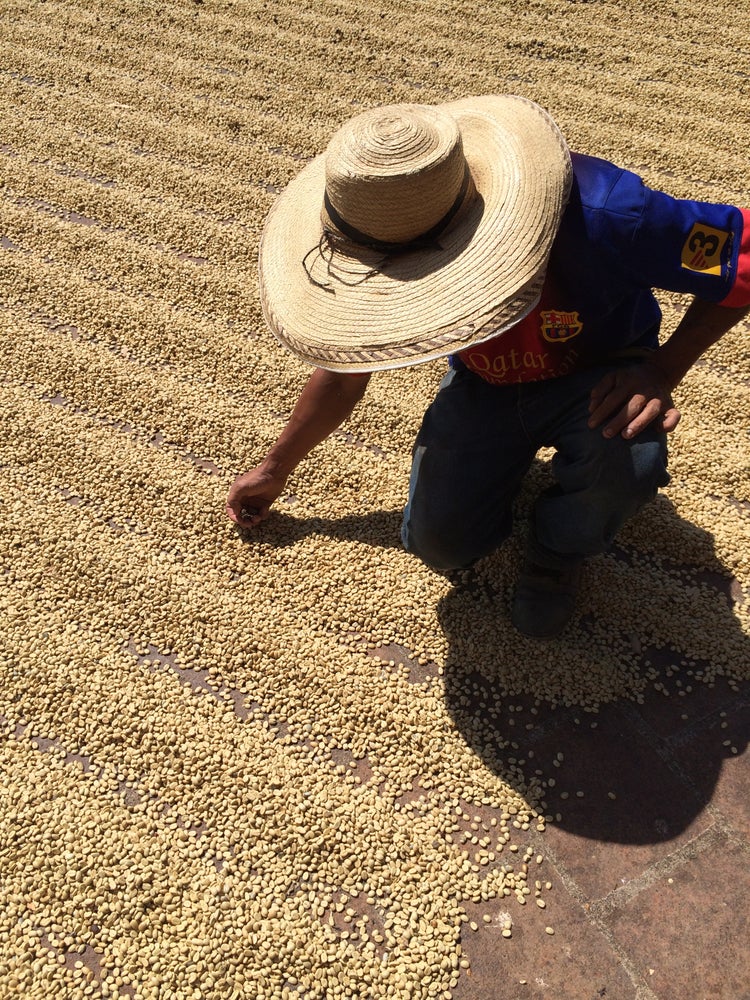
Nilsa and her family selectively handpick ripe cherry. Cherry is pulped and fermented for 12 to 18 hours. Following fermentation, parchment is washed in clean water and laid to dry in parabolic dryers. They use shade nets to regulate temperature and rack drying parchment frequently to ensure even drying. It takes approximately 10 to 15 days for parchment to dry.
About Nariño
The Nariño department sits in the far south of Colombia. It borders Ecuador and the high Andean peaks. Its closeness to the equator enables coffee cultivation at very high altitudes. Many farms are located at heights surpassing 2,000 meters above sea level.
While coffee growing is not traditionally seen at such high altitudes, it is possible in Nariño thanks to plenty of sunlight, dependable and frequent rainfall, and rich soils. Furthermore, the landscape helps ensure nights do not get too cold for growing cherry. The heat that accumulates in the bottom of canyons rises into the mountains at night, protecting cherry from the extreme nighttime cold that comes with such a high altitude.
There are no less than three volcanoes in the Cordillera Occidental, a branch of the Andes mountains in Colombia. These volcanoes reach altitudes as high as 4,700 meters above sea level. While volcanic activity can sometimes present hazards to life and coffee farming, the rich volcanic soil full of nutrients provides an excellent growing medium for coffee plants. The nutrients, combined with lower temperatures helps to slowly form coffee fruits and concentrate their sugars. The result is complex, sweet and acidic coffees.
Coffee in Colombia
Colombia has been producing and exporting coffee renowned for their full body, bright acidity and rich aftertaste, since the early 19th century.
Colombia boasts a wide range of climates and geographic conditions that produce their own unique flavors in coffee. This also means that harvest times can vary quite a bit. In fact, between all its different regions, Colombia produces fresh crop nearly all year round.
The increasing focus on the specialty industry is changing the way traders and farmers do business. It is becoming more common for farmers to isolate the highest quality beans in their lots to market separately. These higher-quality lots are often sold under specific brands or stories.
Besides its wide variety of cup profiles, Colombia has quickly expanded its certification options over the past 10 years. The most common certifications available are Fairtrade, Rainforest Alliance and Organic.