
Methylene Chloride (MC)
The methylene chloride (MC) decaffeination process is relatively simple. The coffee beans are moistened with water and MC is circulated throughout. The MC binds with the caffeine in the bean and extracts it while leaving most of the other flavor compounds. After the desired caffeine level is reached, the MC residue on the beans is removed by steaming them.
Because MC is not naturally occurring in plants, the resulting decaffeinated coffee cannot be labeled as “naturally decaffeinated.” However, MC has been determined by several health organizations not to be a health risk in amounts under 10 parts per million (PPM). In MC decaffeinated coffee, MC remains in amounts under 1 PPM. Further, MC is highly volatile and evaporates at 40 degrees C. Considering the high temperatures of roasting (about 204 degrees C) and brewing (about 93 degrees C) it is highly unlikely that any MC remains in the final beverage.
SHG
Strictly High Grown (SHG) specifies the altitude at which the coffee was grown. A coffee must be grown at 1,200 meters above sea level or higher to be considered SHG. The higher altitude and lower temperatures mean that the coffee fruit matures more slowly, creating a denser bean.
European Preparation (EP)
EP stands for European Preparation. EP beans are Screen 15+ with a low defect tolerance.
Rainforest Alliance
RFA stands for Rainforest Alliance, a certification system that emphasizes climate-smart agriculture. RFA farms have at least 40% of land covered by canopy, significant species diversity (at least 12 native tree species per hectare, on average) and a system of natural vegetation buffers between agricultural land and bodies of water. The farms also use organic fertilizers.
Coffee in Nicaragua
Nicaragua may not be the most famous producer of Central American coffee, but it has great potential. The country is known as the land of ‘los lagos y los volcanes’ (lakes and volcanos) and has many coffee growing ‘pockets’ that few have heard of or experienced. Many producers in the country are experimenting with new varieties and processing methods, making it a specialty origin to watch.
Many coffee producers in Nicaragua today are buoyed by cooperatives that provide a wide array of services, supports and opportunity. As seen in the win of the ‘El Acuerdo de las Tunas’, where 3,000 landless workers won land rights, collective action by farmers can be far more effective at enacting widespread change than the advocacy of individual farmers.
Cooperatives and farmer associations in Nicaragua encompass a large percentage of the country’s coffee producers, and they are taking their destiny in their own hands. By putting great emphasis on quality and by aiming for the international specialty coffee industry, cooperatives and farmers associations are helping their members gain influence and import that will, hopefully, garner enough profit to enable farmers to continue to improve and invest in their farms and their families.
Large and medium-sized (10+ hectare) farms also hold a significant place in Nicaragua’s coffee landscape, as well. Many of these farms have also prioritized social and environmental issues and are working on quality improvements at both cultivation and post-harvest levels.
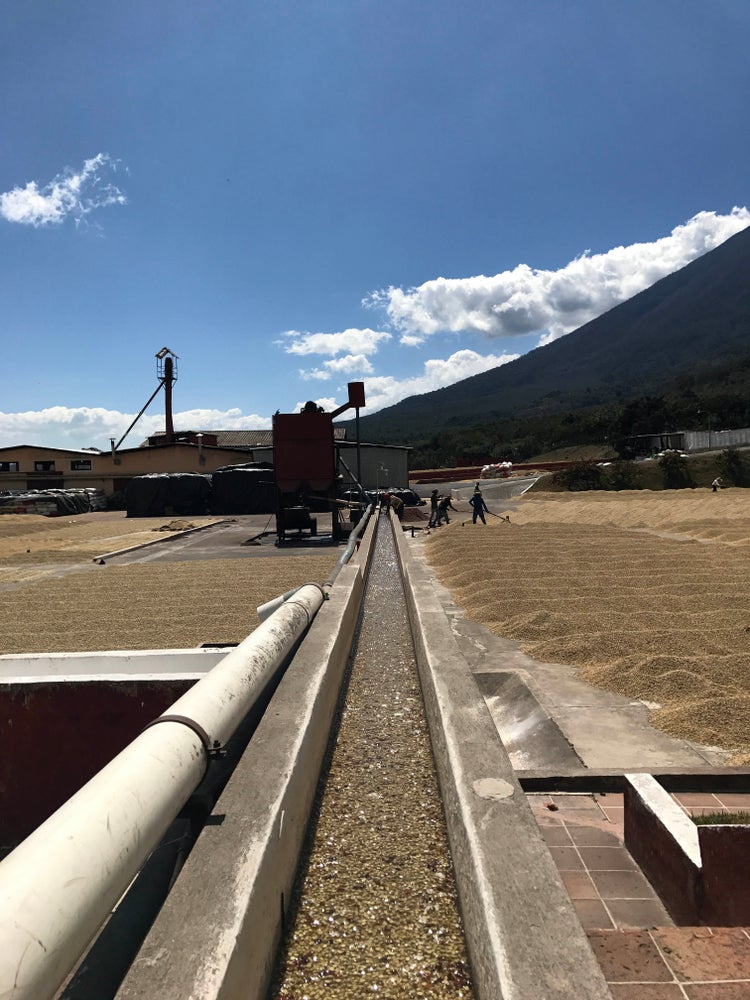
Farmers, for the most part, will process coffee on their own farms, and the majority of the time coffee is dried on large drying patios under sun.