About This Coffee
Nestled at 1,800 meters above sea level on the slopes of the Aberdare Ranges, Ngethu Farm thrives in rich red volcanic soils, creating the perfect conditions for high-quality coffee. The farm is one of 3 owned and operated by Edmax Tea and Coffee in Central Kenya’s North Kiambu County.
Established in 1964 by Dedan Kamau, coffee farming at Ngethu is now managed by his third-generation successors. Alongside Ngethu, Edmax also operates Kimatta and Kairima farms in Gatanga, Murang'a County, all situated close to each other despite being in different administrative areas.
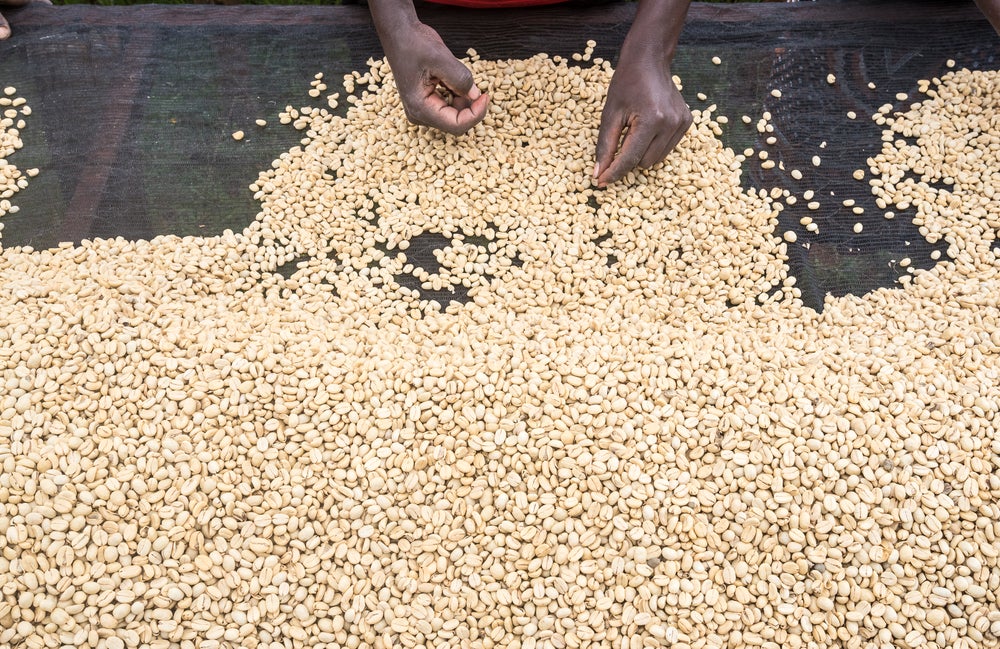
Coffee from Ngethu is processed at the nearby Kimatta factory facility. Drying is done on raised metallic beds, ensuring optimal airflow for consistent quality.
Edmax also operates a roastery and cafe business, serving the local population with exceptional brews and nurturing the growing specialty coffee scene within Kenya.
Cultivation
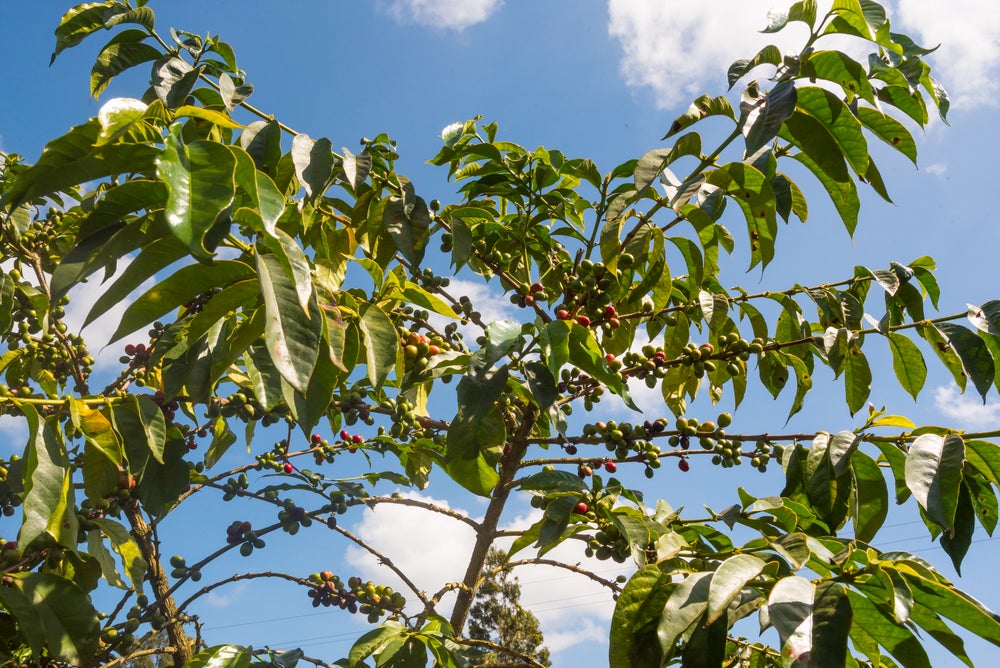
Edmax Tea and Coffee cultivate SL28, SL34 and Ruiru 11 on Ngethu Farm. ‘SL’ varieties are cultivars originally released by Scott Agricultural Laboratories (SAL) in the 1930s and 1940s. They soon became the go-to trees for many growers in Kenya due to their deep root structure, which allows them to maximize scarce water resources and flourish even without irrigation. They are cultivated with a serious eye towards sustainability and Good Agricultural Practices, with minimal environmental impact where possible. Ruiru 11 is a new variety known for its disease resistance and high yields. It starts yielding fruit after just 2 years.
Harvest & Post-Harvest
Coffee cherries are carefully handpicked at peak ripeness by delivered on the same day to Kimatta Factory for processing. Cherries are first handsorted to remove any underripe or damaged cherry and are then pulped on a disc pulper to remove the outer skin.
Parchment is then fermented for 12 to 24 hours, depending on temperature and climate conditions, to break down the mucilage. After fermentation, they are thoroughly washed through grading channels before being transferred to metal raised beds for drying. The drying process lasts 7 to 14 days, with workers frequently turning the parchment to ensure even drying and prevent defects. Once fully dried, the parchment is removed through hulling and the beans are graded before export.
About Kiambu
Kiambu is right outside Kenya’s capital city of Nairobi but is nonetheless known for agriculture – specifically coffee and tea. The county is also home of the Kenyan Coffee Research Foundation.
Kiambu County is also well known for its dairy production, and is the largest dairy producing county in Kenya. Many of the growers here adhere to organic fertilizing practices, using only cow manure instead of agrochemicals on their coffee trees.
Farmers in Kiambu face low production due to pests and disease while simultaneously having to pay high prices for inputs. In recent years, many have felt the strain and have sold their land to real-estate developers looking to build on the edge of Nairobi.
AB Grade
Kenyan coffees are classified by size. AB beans are those that are between screen size 15 and 18 meaning that beans are between 6 and 7 millimeters in size.
AA Grade
Kenyan coffees are classified by size. AA beans are the largest size. AA grade coffees are those that are 17/18 screen size, meaning that they are larger than 7.2 millimeters.
About Ruiru 11
Ruiru 11, a hybrid of Catimor and SL cultivars, is both Coffee Berry Disease (CBD) and Coffee Leaf Rust (CLR) resistant. Plus, it can be planted at a much higher density than the SL varieties, making optimal use of small plots of land.
Ruiru 11 has slowly ‘taken root’ across most of Kenya’s coffee growing landscape. The only issues were that with a shallower root structure, many farmers found the plant less hardy in drought conditions, and the trees required a more intense feeding program. Over time, farmers have found that by grafting Ruiru-11 to SL varieties they could take advantage of SL trees’ expansive root system and still reap the increased yields and higher immunity to disease of Ruiru-11.
Due to the grafted Ruiru-11’s growing popularity, most farms in Kenya today, both big and small, have a mixture of Ruiru-11 and SL varieties. As SL trees age, many farmers are opting to turn more towards Ruiru-11 (or the grafting solution) thanks to its ease of use and higher resistance to diseases.
Source: https://varieties.worldcoffeeresearch.org/varieties/ruiru-11 & https://sucafina.com/na/news/think-you-know-kenya-coffee-varieties-think-again
About SL28 & SL34
SL28 and SL34 were two of the cultivars released by Scott Agricultural Laboratories (SAL) during the height of SAL’s research in Kenya in the 1930s and 1940s. They soon became the cultivars of choice for most growers thanks to their deep root structure that allows them to maximize scarce water resources and flourish even without irrigation. SL varieties also had higher yields than the French Bourbon rootstock that they replaced and were known to be somewhat more disease resistant.
Coffee in Kenya
Though coffee growing had a relatively late start in Kenya, the industry has gained and maintained a impressive reputation. Since the start of production, Kenyan coffee has been recognized for its high-quality, meticulous preparation and exquisite flavors. Our in-country sister company, Sucafina Kenya, works with farmers across the country to ensure these exceptional coffees gain the accolades they deserve.
Today, more than 600,000 smallholders farming fewer than 5 acres compose 99% of the coffee farming population of Kenya. Their farms cover more than 75% of total coffee growing land and produce nearly 70% of the country’s coffee. These farmers are organized into hundreds of Farmer Cooperative Societies (FCS), all of which operate at least one factory. The remainder of annual production is grown and processed by small, medium and large land estates. Most of the larger estates have their own washing stations.
Most Kenyan coffees are fully washed and dried on raised beds. The country still upholds its reputation for high quality and attention to detail at its many washing stations. The best factories employ stringent sorting practices at cherry intake, and many of them have had the same management staff in place for years.