
About This Coffee
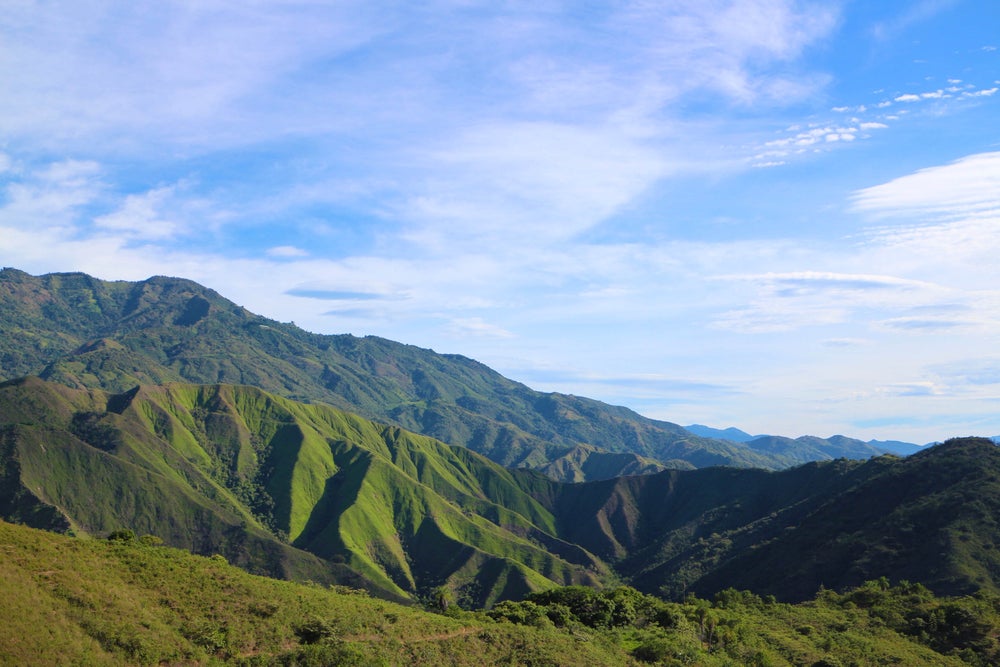
Located in the heart of Eje Cafetero (Coffee Axis), Manizales has the ideal climate and soil conditions for cultivating high-quality coffees. Coffee farming was introduced to Manizales in the mid-1800s when 14 families settled in the region to grow coffee. Today, more than 100,000 coffee farming families live in Manizales.
Cultivation
Thanks to their proximity to Nevado del Ruiz, a volcano near Manizales, soils are volcanic ash. Farms sit at 1,300 to 1,950 meters above sea level. Farms are, on average, smaller than 2 hectares.
Harvest & Post-Harvest
Since farms are small, most labor is done by the family. Farmers selectively handpick ripe, red cherry and process it on their farms. They pulp cherry on small, hand crank pulpers and ferment coffee in tanks. Following fermentation, they wash parchment in clean water and lay it to dry on marquesinas. They rake parchment frequently to ensure even drying.
Supremo Grade
Screen sizes remain fairly uniform across countries but grade names are often unique to the country of origin. In the Colombian grading system, Supremo is the largest size bean.
The process of separating beans by size is a crucial stage of the dry milling process. A screen grading machine has a series of screens stacked on top of each other. Green coffee is fed into the machine, and as the screens are shaken, beans that are smaller than holes on a specific screen will fall through to a lower screen until they reach a screen with holes too small for them to fit.
Supremo is typically screen sizes 17 to 18.
Coffee in Colombia
Colombia has been producing and exporting coffee renowned for their full body, bright acidity and rich aftertaste, since the early 19th century.
Colombia boasts a wide range of climates and geographic conditions that produce their own unique flavors in coffee. This also means that harvest times can vary quite a bit. In fact, between all its different regions, Colombia produces fresh crop nearly all year round.
The increasing focus on the specialty industry is changing the way traders and farmers do business. It is becoming more common for farmers to isolate the highest quality beans in their lots to market separately. These higher-quality lots are often sold under specific brands or stories.
Besides its wide variety of cup profiles, Colombia has quickly expanded its certification options over the past 10 years. The most common certifications available are Fairtrade, Rainforest Alliance and Organic.