
About This Coffee
Wurae station was founded in 2014 in the renowned coffee-producing region of Yirgacheffe. About 700+ farmers deliver to the station and many live in the nearby town of Halo Berti. They cultivate local landraces and JARC varieties on small farms that are typically 1.5 hectares in size. Their farms sit at 1,800 to 2,200 meters above sea level and are located within 3 kilometers of the station.
Wurae pays a price premium for high-quality cherry to incentivize careful cultivation and selective picking. For most farmers, coffee is the main – and often only – source of income for their families. Since there has been a population boom and a shortage of land, one important use of family income is sending their children to school so that they can find jobs that don’t require land ownership.
Cultivation
Most farms are organic-by-default. Farmers use mainly animal manure and compost as fertilizer. Wurae station provides training in Good Agricultural practices and agronomist extension.
Harvest & Post-Harvest
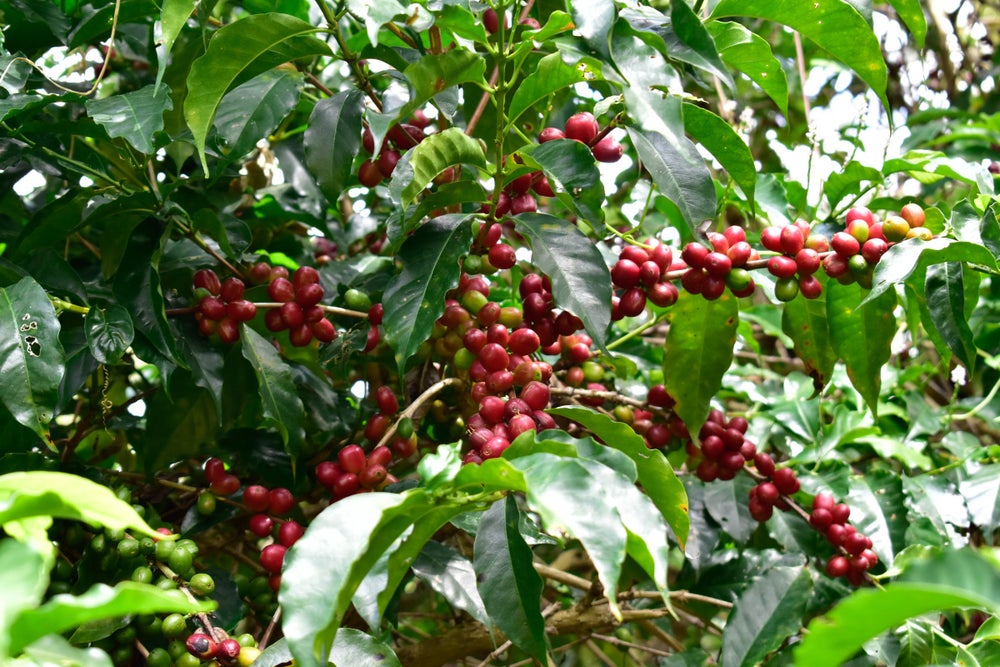
Farmers and their families selectively handpick ripe, red cherry and deliver it to Wurae washing station. At intake, cherry is floated to remove underripes.
Ripe cherry is laid in a single layer on raised beds to dry. Parchment is turned frequently – about every 30 minutes – to ensure even drying. As cherry dries, workers inspect drying cherry and remove any damaged cherry.
After a few days of drying, cherry is adjusted into a slightly thicker layer to slow drying and frequent raking continues. In total, it takes 8 to 20 days for cherry to dry.
The next day, parchment is moved to raised drying tables to sundry slowly. Parchment is raked frequently to ensure even drying. It takes between 9 and 12 days for parchment to dry.
Ethiopia Grade 1
Grades in Ethiopia depend on visual inspection for defects and on cup quality. Grade 1 is considered the highest quality coffee. Grade 1 and 2 are considered specialty coffee, grades 3-9 are classified as commercial coffee. Grade 1 is free of cup faults and taints and has zero quakers.
Coffee in Ethiopia
While Ethiopia is famous as coffee’s birthplace, today it remains a specialty coffee industry darling for its incredible variety of flavors. While full traceability has been difficult in recent history, new regulations have made direct purchasing possible. We’re partnering directly with farmers to help them produce top quality specialty lots that are now completely traceable, adding value for farmers and roasters, alike.
The exceptional quality of Ethiopian coffee is due to a combination of factors. The genetic diversity of coffee varieties means that we find a diversity of flavor, even between (or within) farms with similar growing conditions and processing. In addition to varieties, processing methods also contribute to end quality. The final key ingredients for excellent coffee in Ethiopia are the producing traditions that have created the genetic diversity, processing infrastructure and great coffee we enjoy today.
Most producers in Ethiopia are smallholders, and the majority continue to cultivate coffee using traditional methods. As a result, most coffee is grown with no chemical fertilizer or pesticide use. Coffee is almost entirely cultivated, harvested and dried using manual systems.