
About This Coffee
Laguna de Ayarza is a double caldera, formed from two, intertwined volcanoes that collapsed during an eruption some 20,000 years ago. The warm day and cool nights in the surrounding hills promote slow cherry maturation, producing sweet, denser beans.
Farms in this region, in Guatemala’s Santa Rosa Department, are known for their sweet, clean, chocolatey cup profile. It was one of the first Departments in Guatemala to farm coffee, thus it is no surprise that it displays such a quintessential Guatemalan profile.
Harvest & Post-Harvest
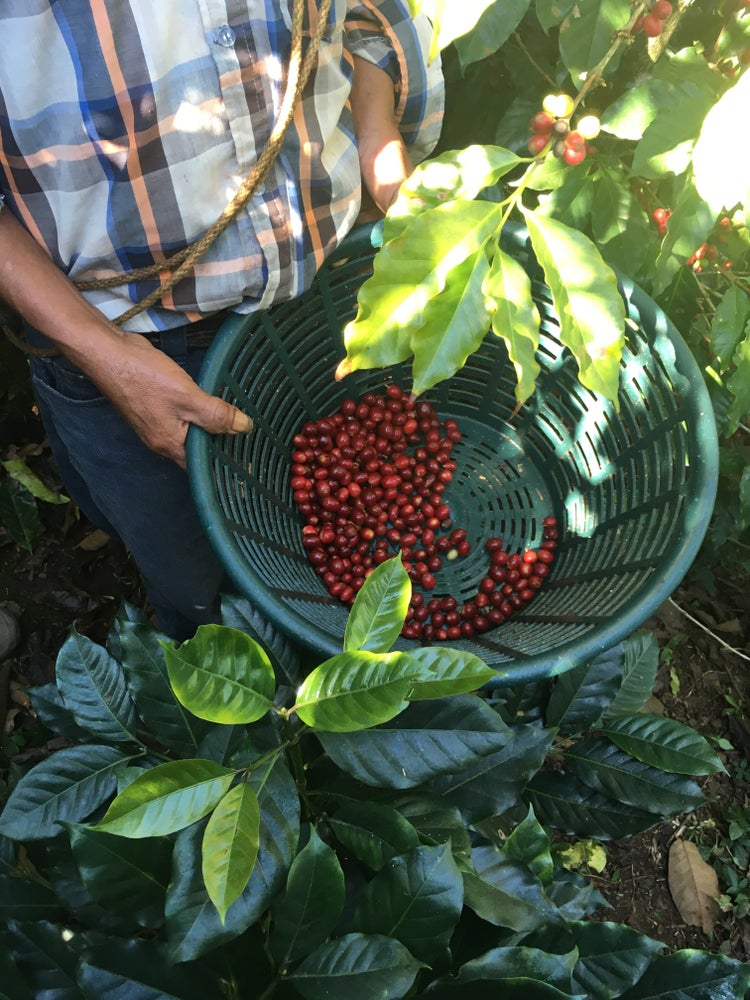
Farmers selectively handpick ripe cherry and deliver it to our partner’s wet mill in Santa Rosa. At the mill, cherry is pulped and fermented and parchment is laid to dry on concrete patios. When the weather is poor or the patios are full, parchment may also be dried in silo rotary dryers. Once dry, parchment is transported to a dry mill in Villa Nueva and prepared for export
Coffee in Guatemala
Guatemala boasts a variety of growing regions and conditions that produce spectacular coffees. Today, the country is revered as a producer of some of the most flavorful and nuanced cups worldwide. We are proud to work with several exceptional in-country partners to bring these coffees to market.
The Guatemalan coffee industry experienced a major setback with the 2010 appearance of Coffee Leaf Rust (CLR) in Latin America. The epidemic peaked in severity in 2012, and though CLR continues to affect some farms, Guatemala continues to produce high-quality, record-breaking coffees. In 2017, new and varied processing methods pushed prices at the Guatemalan Cup of Excellence contest to record highs.
The quality of coffee being produced in Guatemala is increasing, overall, due to the diversity of the industry’s producers. There are more and more small holder farmers producing exceptional coffee at high altitudes. Cooperatives are becoming more appealing to so many smallholders because they often offer farmers financing and other support for improving their farming and processing and are frequently able to offer higher prices for cherry than middlemen. Many cooperatives have initiated quality improvement training for farmer members and are becoming more adept at helping members market their coffee as specialty.