From the Field, News
Friday, August 16, 2024
Best Indonesian Harvest in Years
This year’s harvest in Indonesia is looking better than it has in years, according to Daniel Shewmaker, Managing Director of Indonesia. Daniel and the Sucafina Indonesia team have been hard at work surveying the harvest, working with supplying partners and expanding IMPACT verification in Indonesia. Be sure to read their insights.
This Article At A Glance
This year’s harvest in Indonesia is looking better than it has in years, according to Daniel Shewmaker, Managing Director Indonesia. Daniel and the Sucafina Indonesia team have been hard at work surveying the harvest, working with supplying partners and expanding IMPACT verification in Indonesia. Be sure to read their insights.
- Keeping in mind that last year was one of the smaller crops on record, year on year we’re seeing an average increase in production of about 20%, with some areas seeing much more.
- The Arabica harvest started in West Java in late April, followed by East Java and Sulawesi. All three are at or near peak cherry flow now in June.
- A new law was implemented in August 2023 which has impacted coffee exports. The law requires that an exporter who submits one export declaration value exceeding $250,000 must receive payment in a special bank account with 30% of the funds blocked for 3 months.
The harvest is gearing up or in full swing across the growing regions on or south of the equator. These include the Robusta of Jambi, Bengkulu, South Sumatra and Lampung, the Arabica of Kerinci, and both Arabica and Robusta on the islands of Java, Bali, Flores, and Sulawesi.
This year’s harvest in Indonesia is looking better than it has in years, according to Daniel Shewmaker, Managing Director Indonesia. Daniel and the Sucafina Indonesia team have been hard at work surveying the harvest, working with supplying partners and expanding IMPACT verification in Indonesia and we’re excited for the updates they have to share.
“Across Indonesia, we saw 3 consecutive poor harvests due to La Niña. Then, El Niño in 2023 brought an actual dry season, which was good for the majority of coffee regions and provided adequate stress to trigger a thicker flowering,” Daniel explains. “That’s leading to a larger harvest this year.” Additionally, it’s worth noting that the dry period caused by El Niño delayed the harvest, so most areas are about 1 to 2 months later than normal.
Harvest Expectations
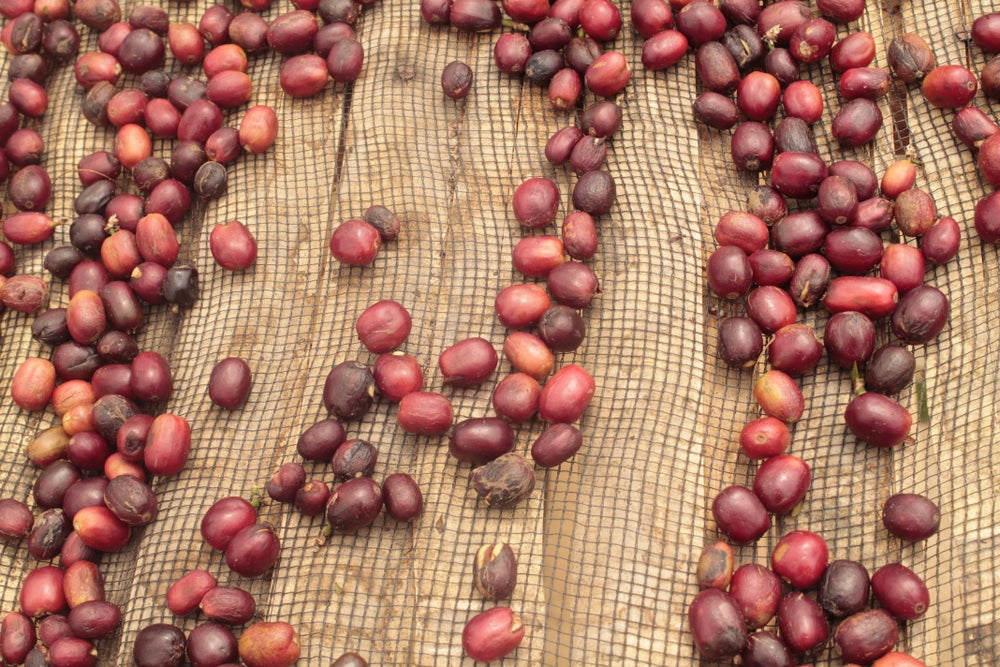
Keeping in mind that last year was one of the smaller crops on record, year on year we’re seeing an average increase in production of about 20%, with some areas seeing more. Cup quality so far has been very good, thanks in part to the better weather for drying and the larger availability of coffee, which is making logistics from coffee growing regions to the port more efficient.
At the same time, “we have noticed that screen size is down and yield from cherry to grade 1 is also down,” Daniel says. This is possibly due to the higher cherry yield per tree, and the dryness, which may have reduced nutrients availability to each cherry.
The Robusta harvest across the southern half of Sumatra began in May, with the higher elevations starting in June. Java is tracking one month later, and Flores one month later than Java. This year, with Robusta prices at an all-time high, farmers are motivated to sell their crop immediately, which could result in less available stocks later in the year.
The Arabica harvest started in West Java in late April, followed by East Java and Sulawesi. All three were at or near peak cherry flow in June. Flores as usual is the last across the southern islands to harvest and will be starting soon with main crop July and August. North Sumatra and Aceh are in the offseason now, with the new crop starting in October.
New Legislation & It’s Impacts
A new law was implemented in August 2023 which has impacted coffee exports. The law requires that an exporter who submits one export declaration value exceeding $250,000 must receive payment in a special bank account with 30% of the funds blocked for 3 months. “Cash flow is critical, and this policy could significantly reduce volume and revenue for many local exporters and raise the cost of doing business,” Daniel explains. Thankfully, a single container of coffee almost never exceeds this amount, so as long as each container has its own bill of lading and export declaration, the restriction can be avoided. However, “this does increase administrative burdens on logistics,” Daniel points out.
Building a Stronger, More Sustainable Supply Chain
We continue to build upon our strong foundation of upstream stakeholders, Daniel says. By year end we will have added more than 3,000 farmers to our direct supply network, a result of organic growth through our presence in Java, Sulawesi, Sumatra and Flores. “Our investment in these supply chains includes financing new processing infrastructure and hiring additional field staff to provide agronomic support, which helps improve coffee quality and revenue for farmers and suppliers.
There is already IMPACT, Sucafina’s responsible sourcing program, coffee available from Indonesia. Last year, Sucafina Indonesia helped the first farmers in Aceh and Java achieve their IMPACT verification.
“Our field team continuously supports farmers with trainings on regenerative agriculture and responsible sourcing,” explains Dineshbabu “Dinesh” Velumany, Sustainability Manager with Sucafina Indonesia. In addition to IMPACT, Sucafina Indonesia also supports farmers and processors as they get and maintain their other industry certifications. “For IMPACT and beyond, we are dynamically scaling up responsible sourcing by providing strategic working capital loans to our supply chain wet mill partners, offering training, developing coffee nurseries, composting facilities, demo plots for the farmers, and implementing digital traceability for our supply chains,” Dinesh says.
The harvest is already in swing in some areas in Indonesia and the remaining areas are to follow suit in the next few months. Now is the best time to get in touch with your trader about sampling and booking fresh crop Indonesian coffees. Don’t miss out!