
About This Coffee
Owned by Negusse Debela, Refisa washing station in Nensebo, Sidamo produces coffees that live up to Sidamo’s reputation for producing a clean, sweet and floral cup. Farmers delivering to Refisa farm coffee at 1,850 to 2,000+ meters above sea level. The ideal microclimate, combined with farmers' careful oversight and the impact of unique local landraces help create a delicious, clean, sweet and floral coffee.
Cultivation
Farmers also cultivate teff, false banana and corn.
Many would say that the strength of Sidamo coffees lie in the regions’ diversity of profiles. The many microclimates and varying soil types lead to striking differences from town to town. But across all Sidamo coffees is a profound complexity that many attribute to the diversity of local landrace varieties. Varieties can differ from town to town and even farm to farm where each farmer may have more than one unique varieties seldom or never found outside their plot. When all these different varieties are blended at the washing station, the resulting blend expresses the complexity of the plant genetics in the area.
Farming methods in Sidamo remain largely traditional. Sidamo farmers typically intercrop their coffee plants with other food crops. This method is common among smallholders because it maximizes land use and provides food for their families.
In addition to remaining traditionally intercropped, most farms are also traditional and organic-by-default. Farmers in Sidamo typically use very few—if any—fertilizers or pesticides. Most farm work is done manually and very few tasks are mechanized, even during processing.
Harvest & Post-Harvest
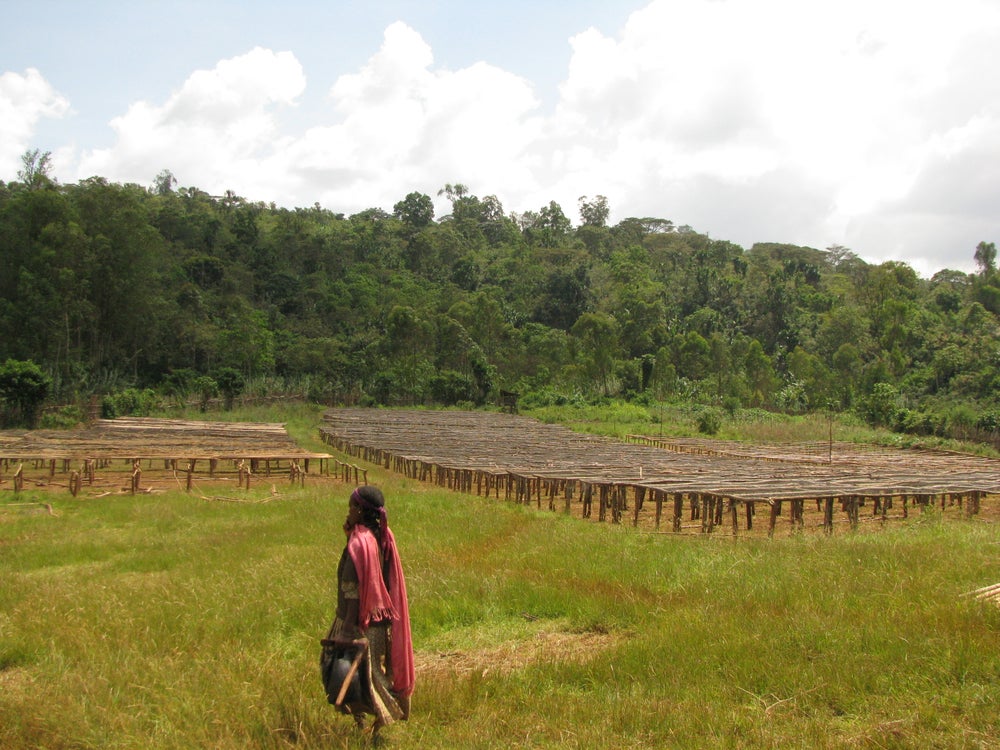
Farmers hand harvest cherry and deliver it to Refisa washing station. At intake, cherry is visually sorted and laid on raised beds. Cherry is raked frequently to ensure even drying. It takes approximately 8 to 10 days for coffee to dry.
Coffee in Ethiopia
While Ethiopia is famous as coffee’s birthplace, today it remains a specialty coffee industry darling for its incredible variety of flavors. While full traceability has been difficult in recent history, new regulations have made direct purchasing possible. We’re partnering directly with farmers to help them produce top quality specialty lots that are now completely traceable, adding value for farmers and roasters, alike.
The exceptional quality of Ethiopian coffee is due to a combination of factors. The genetic diversity of coffee varieties means that we find a diversity of flavor, even between (or within) farms with similar growing conditions and processing. In addition to varieties, processing methods also contribute to end quality. The final key ingredients for excellent coffee in Ethiopia are the producing traditions that have created the genetic diversity, processing infrastructure and great coffee we enjoy today.
Most producers in Ethiopia are smallholders, and the majority continue to cultivate coffee using traditional methods. As a result, most coffee is grown with no chemical fertilizer or pesticide use. Coffee is almost entirely cultivated, harvested and dried using manual systems.