
Cultivation
Most producers in Ethiopia are smallholders, and the majority continue to cultivate coffee using traditional methods. As a result, most coffee is grown with no chemical fertilizer or pesticide use. Coffee is almost entirely cultivated, harvested and dried using manual systems.
Much of the coffee grown in Kaffa is grown in coffee forests amidst a diverse mix of plant and animal life. Coffee forests offer an incredible amount of genetic diversity. Trees in the same forest—or even right next to each other—can often be different varieties.
The majority of coffees grown in Kaffa are local landrace varieties (which have, in the past, been called Ethiopian heirloom). The other varieties grown in the region are from the Jimma Agricultural Research Centre (JARC). JARC is an important research center for Ethiopia and provides disease resistant varieties that also preserve cup quality.
Harvest & Post-Harvest
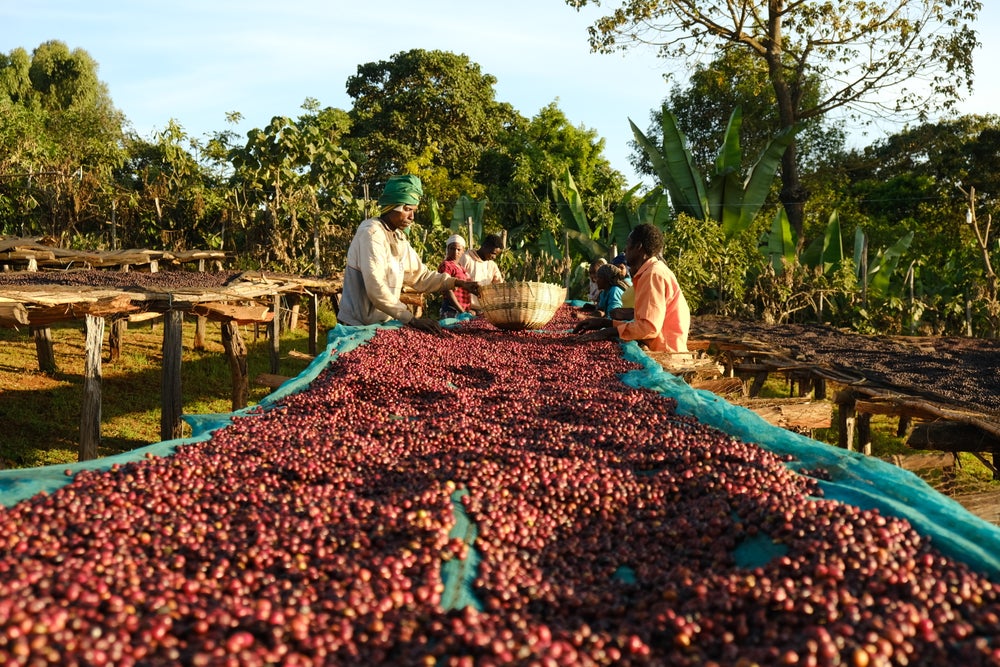
All coffee is selectively handpicked. Producers deliver cherry to a washing station where it is sorted to remove damaged or under ripe cherry and then laid on raised beds to dry under shade. Cherry is raked regularly to ensure even drying. It takes approximately 10 to 20 days for cherry o dry.
Coffee in Ethiopia
While Ethiopia is famous as coffee’s birthplace, today it remains a specialty coffee industry darling for its incredible variety of flavors. While full traceability has been difficult in recent history, new regulations have made direct purchasing possible. We’re partnering directly with farmers to help them produce top quality specialty lots that are now completely traceable, adding value for farmers and roasters, alike.
The exceptional quality of Ethiopian coffee is due to a combination of factors. The genetic diversity of coffee varieties means that we find a diversity of flavor, even between (or within) farms with similar growing conditions and processing. In addition to varieties, processing methods also contribute to end quality. The final key ingredients for excellent coffee in Ethiopia are the producing traditions that have created the genetic diversity, processing infrastructure and great coffee we enjoy today.
Most producers in Ethiopia are smallholders, and the majority continue to cultivate coffee using traditional methods. As a result, most coffee is grown with no chemical fertilizer or pesticide use. Coffee is almost entirely cultivated, harvested and dried using manual systems.