
About This Coffee
Located just north of Nairobi in Kiambu County at an altitude of around 1650 meters above sea level Nyala Estate is one of the oldest coffee farms in the country.
The high altitude and cool climate make Nyala Estate an ideal location for coffee farming.
Harvest & Post-Harvest
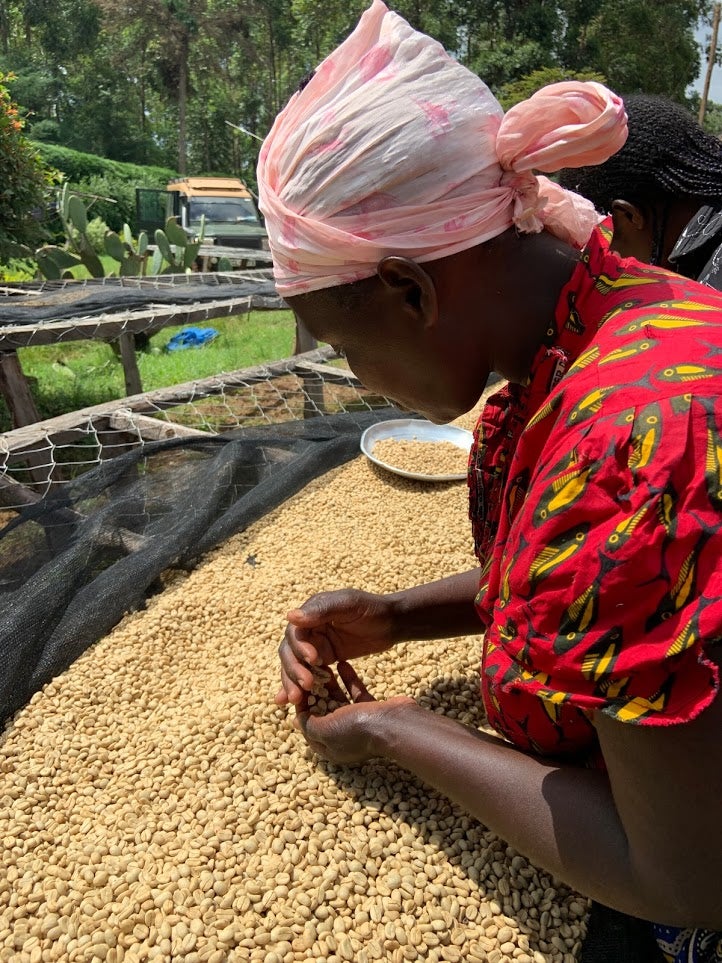
Processing at Nyala Estate is iconically Kenyan. After harvest, cherry is pulped on a disc pulper and then fermented. Following fermentation, parchment is washed and then soaked in clean water before being laid to sundry on raised beds.
AB Grade
Kenyan coffees are classified by size. AB beans are those that are between screen size 15 and 18 meaning that beans are between 6 and 7 millimeters in size.
Coffee in Kenya
Though coffee growing had a relatively late start in Kenya, the industry has gained and maintained a impressive reputation. Since the start of production, Kenyan coffee has been recognized for its high-quality, meticulous preparation and exquisite flavors. Our in-country sister company, Sucafina Kenya, works with farmers across the country to ensure these exceptional coffees gain the accolades they deserve.
Today, more than 600,000 smallholders farming fewer than 5 acres compose 99% of the coffee farming population of Kenya. Their farms cover more than 75% of total coffee growing land and produce nearly 70% of the country’s coffee. These farmers are organized into hundreds of Farmer Cooperative Societies (FCS), all of which operate at least one factory. The remainder of annual production is grown and processed by small, medium and large land estates. Most of the larger estates have their own washing stations.
Most Kenyan coffees are fully washed and dried on raised beds. The country still upholds its reputation for high quality and attention to detail at its many washing stations. The best factories employ stringent sorting practices at cherry intake, and many of them have had the same management staff in place for years.