
About This Coffee
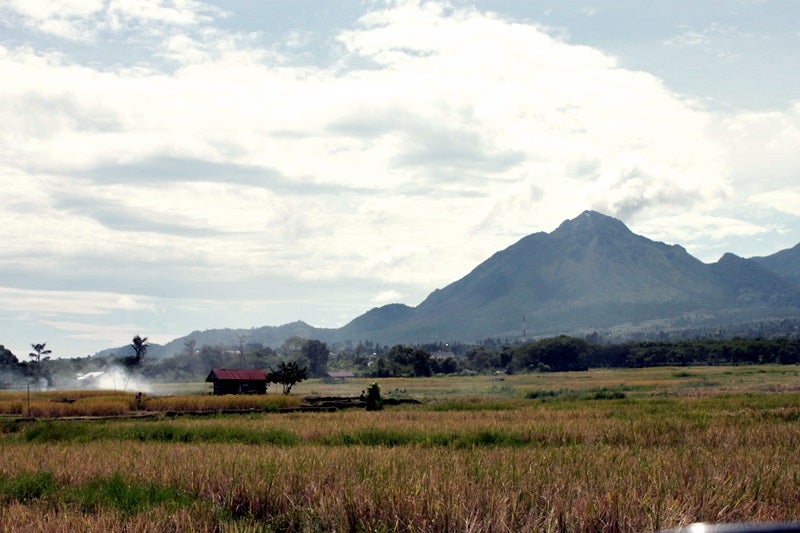
This coffee, grown in the picturesque mountains surrounding Lake Tawar, is the product of a direct relationship between growers and importers that is extremely rare in Indonesia.
Unlike most coffee grown in Indonesia, which pass through too many hands to keep accurate traceability, our partner, CV Yudi Putra works directly with small producers. Beyond sourcing, they speak to producers about their production process and quality issues and help them implement simple solutions to improve consistency and quality. They also offer training on improving quality and implementing good agronomy practices.
Harvest & Post-Harvest
Indonesia is known for its unique wet-hulled process (giling basah). After handpicking cherry, farmers process their cherry using the traditional wet hulling (giling basah) method. Following harvest, cherry is pulped at or near the farm, on small hand-cranked or motorized pulpers. The coffee is fermented for approximately 12 hours (in small tanks, buckets or bags) and washed with clean water the following morning. Parchment is sun-dried for between half a day and two days, depending on the weather, to allow for skin drying which eases the removal of parchment.
At this juncture the moisture content is between 30-40%. Farmers deliver their parchment to a collector that works with CV Yudi Putra. Collectors may either wet hull the parchment themselves or sell the parchment on to someone who will. These steps become an essential part of the process here because a wet hulling machine, though slightly different, requires a similar investment to a dry huller. Wet hullers are larger, require more power and run at a faster speed than a traditional dry huller. Few, if any, individual farmers have their own hullers.
After hulling, the coffee seed is whitish and pliable and is called labu. It is laid out to dry on tarps or patios, where it reduces in size and moisture decreases to 14-15%. This stage the green coffee is known as asalan—unsorted and with defects.
Coffee in Indonesia
Indonesia has a long coffee producing history, but recently their coffees have been overlooked by the specialty market. Thanks to our innovative and ever-expanding supply chain, we are proud to bring you high-quality coffees from many of Indonesia’s unique regions, accompanied by in-depth traceability information.
Indonesia is perhaps best known for its unique wet hulling process (giling basah). Though its exact origins are unclear, wet hulling most likely originated in Aceh during the late 1970s.
Wet hulling’s popularity can be attributed to producers’ need for prompt payments. It was also adopted specifically by many producers who lacked the drying infrastructure that was needed to shelter drying parchment from the high humidity and inconsistent rainfall typical in Sumatra. At higher elevations with constant humidity and unpredictable rainfall, drying can prove to be slow, risky and difficult.