
About This Coffee
Established in April 2020, the Abebe Mulugeta producer group at Abebe Mulugeta Hambela station is comprised of 150 smallholder producers in Hambela, Yirgacheffe. Farmers cultivate coffee at the impressive heights of 1,750 to 2,000 meters above sea level. These high altitudes create the ideal microclimate for cultivating sweet, dense cherry.
Cultivation
TFarms are small, about 2 hectares on average, which enable farmers to invest time and energy into high-quality cultivation. Most farms in Guji are organic-by-default and most farm work is done by the family.
Harvest & Post-Harvest
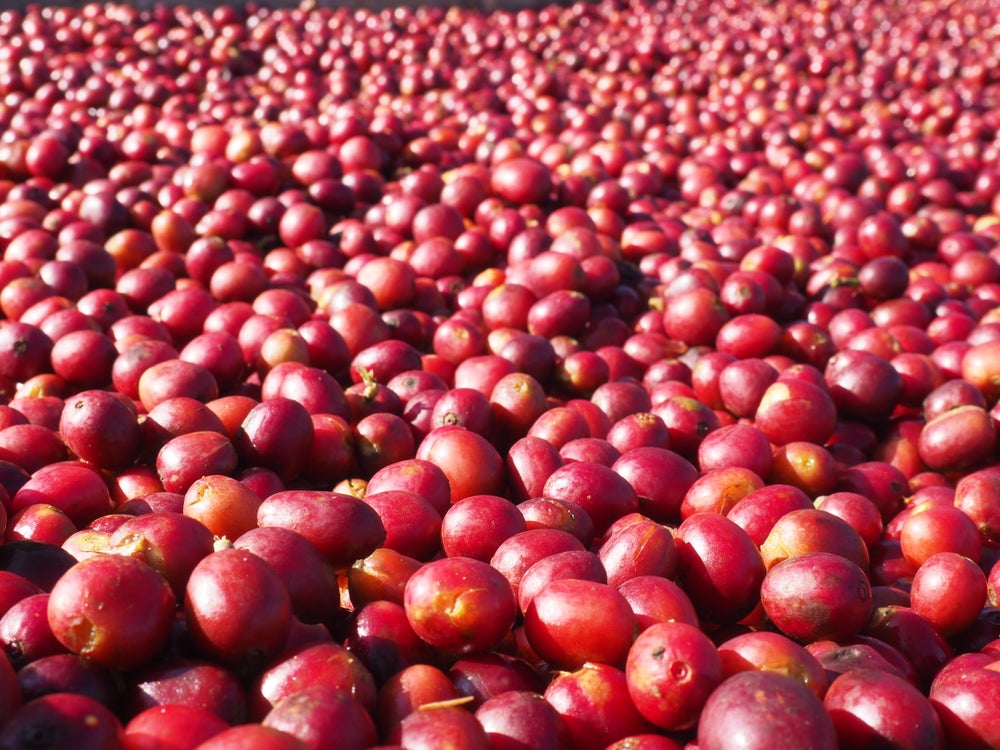
Farmers and their families selectively handpick ripe, red cherry and deliver it to Abebe Mulugeta Hambela station. At intake, cherry is selectively hand sorted to ensure only ripe cherry is processed. Accepted cherry is laid on raised beds to dry. Workers rake cherry frequently to ensure even drying and visually hand sort drying cherry to remove any damaged or underripes. It takes approximately 12 to 17 days for cherry to dry.
About Guji
Guji coffee has only recently been distinguished from neighboring Sidamo and Yirgacheffe. However, due to their incredible quality and unique profiles, they are quickly gaining international recognition.
The Guji region receives ample rainfall and is marked by steep mountainous terrain: perfect conditions to support the vast array of coffee grown here.
Grade 2
In the Ethiopian grading system, grade 2 refers to the cup quality as well as physical quality of a coffee. A grade 2 allows between four and 13 full defects per 300gr green sample. The cup typically has fruity and clean characteristics without any off-flavors.
Ethiopia Sidamo 2 is a classic in every coffee range and is especially popular in blends. The cup quality can be very surprising for prices well below the grade 1 price point. For us, grade 2 coffee typically sits around an 83-84 cup score.
Coffee in Ethiopia
While Ethiopia is famous as coffee’s birthplace, today it remains a specialty coffee industry darling for its incredible variety of flavors. While full traceability has been difficult in recent history, new regulations have made direct purchasing possible. We’re partnering directly with farmers to help them produce top quality specialty lots that are now completely traceable, adding value for farmers and roasters, alike.
The exceptional quality of Ethiopian coffee is due to a combination of factors. The genetic diversity of coffee varieties means that we find a diversity of flavor, even between (or within) farms with similar growing conditions and processing. In addition to varieties, processing methods also contribute to end quality. The final key ingredients for excellent coffee in Ethiopia are the producing traditions that have created the genetic diversity, processing infrastructure and great coffee we enjoy today.
Most producers in Ethiopia are smallholders, and the majority continue to cultivate coffee using traditional methods. As a result, most coffee is grown with no chemical fertilizer or pesticide use. Coffee is almost entirely cultivated, harvested and dried using manual systems.