From the Lab, News
Tuesday, July 1, 2025
Meet Orlando Gómez: Head of Production & Quality, Sucafina Colombia
Our Sucafina Quality Control (QC) teams are the heart and soul of our coffee selection process – they’re the ones cupping, calibrating, collecting data and making sure we’re delivering top-quality coffee, every single time. In this installment of our ‘Meet our QC Team’ series, we sat down with Orlando Enrique Gómez Prieto, Head of Production and Quality at Sucafina Colombia.
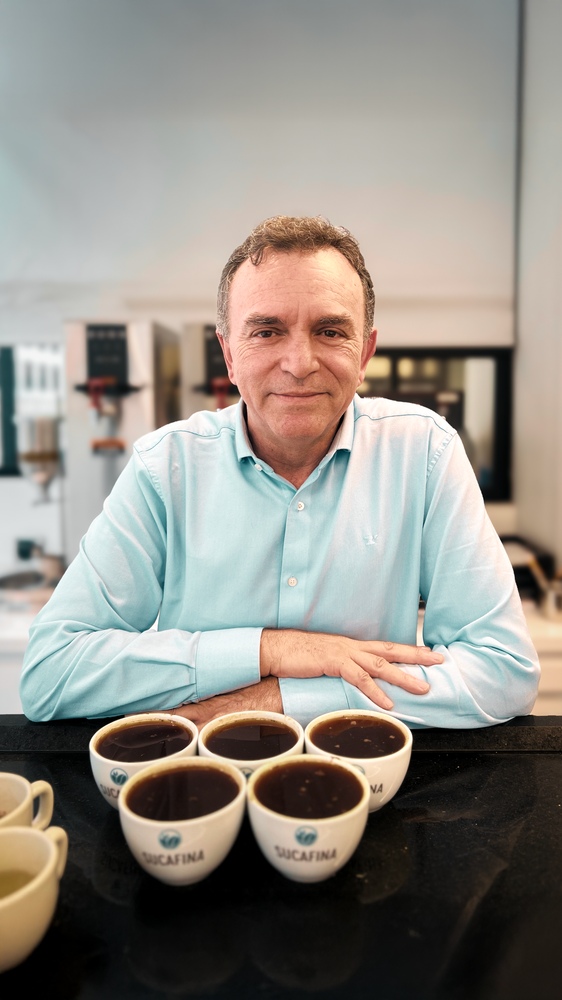
Orlando has been with Sucafina since 2016, when Sucafina Colombia was founded, and has helped shape the way we approach quality and production in one of the world’s most iconic coffee origins. With decades of experience and a deep understanding of the challenges in both the field and the lab, he brings a sharp eye, steady leadership and a genuine passion for excellence to everything he does.
This Article at a glance:
- With over 30 years of experience, Orlando has played a key role in building Sucafina Colombia’s quality and production department helping lay the foundation for its growth and success.
- From managing climate-related challenges, like La Niña, and their impact on quality control to maintaining strict export standards, Orlando shares how his team safeguards coffee quality every step of the way.
- Orlando offers practical, sensory-based training insights and advice for aspiring QC professionals and explains why passion and precision are at the heart of great quality control.
What are your main roles as a Quality Manager?
Orlando: My main responsibilities as Head of Production and Quality at Sucafina Colombia can be summarized into three main pillars:
- Leading the quality and production team: I ensure we contribute effectively to the company’s goals. I focus heavily on training, listening and understanding the team. A key part of my role is supporting them. Thanks to my experience, I can often anticipate challenges and guide them with insights on what’s happening and how to manage it, always with the goal of achieving the company’s targets.
- Planning the team structure: I’ve been here since Sucafina started in Colombia, so I’ve helped build and strengthen the department from scratch. It’s important to highlight that we were the first team in Colombia to combine production and quality. Unlike most coffee exporters in Colombia, Sucafina unifies production and quality control under a single management team. This integrated approach ensures a deeper understanding of client-specific requirements, optimizes the use of raw materials, and enables faster, more effective decision-making when addressing quality issues.
- Adapting to environmental conditions: During La Niña years, for example, we often deal with high humidity issues. Coffees arrive inconsistently; some well-dried, others overly moist. We have to talk to intermediaries and ask them not to deliver such uneven lots, because it creates problems. Improper drying leads to over-fermentation, vinegar notes, mold… We’ve learned a lot over the years. A few years ago, we had to investigate the cause of phenol defects. Eventually, we found they were linked to poor drying and storage practices.
What practices do you use to ensure commercial coffee maintains its quality, especially during storage and transport?
Orlando: We follow a series of protocols that capture most of the knowledge we’ve developed over time. Sampling is essential, and we must stay alert to potential issues or tricks. Our main challenge is to transfer this know-how and these practices to new team members, many of whom don’t yet have the full picture.
It’s important for them to understand that coffee can look great visually but still have problems in the cup. So, all our quality control protocols are essential.
We also talk to our suppliers. If we see recurring issues like high humidity, we inform them. Sometimes we must reject lots. If a problem arises, we aim to be flexible while still offering guidance. For example, in specialty coffee, we might say: “Yes, the flavor profile is good, but the sorting is poor.” We provide advice so they can take corrective action.
How do you train new cuppers or lab assistants to align with your sensory evaluation?
Orlando: In-person training is fundamental. This can’t be done virtually; it’s part of our daily work. When someone joins, they need to shadow an experienced team member. Understanding coffee flavors is all about association.
For example, when we say coffee has a moldy note, how does someone know what mold smells like if they’ve never experienced it? So we use real-life comparisons. One common example: imagine being in an old house, opening an old wooden drawer and getting hit with that musty air. That becomes a reference point you’ll never forget.
It’s the same with fruity or pulpy off-notes. If you’ve ever been on a farm where coffee pulp is fermenting, that smell stays with you – and you’ll recognize it instantly in the cup later.
There’s always someone more experienced, and being able to characterize coffees fully (high, medium, low quality) can take years.
You also have to learn that some aspects are subjective. For instance, if a bean is partially vinegary, should it be penalized or not? You have to weigh multiple factors. Our goal isn’t to reject coffee – it’s to identify its best use and help solve problems.
Of course, if we’re receiving raw materials from a supplier and the lot doesn’t meet our standards, we’ll reject it. But, even then, we aim to guide and provide feedback.
What advice would you give to someone wanting to pursue a career in coffee quality?
Orlando: Passion is everything. You have to love what you do. When there’s a “click” between your personality and coffee, how you taste, how you see the world, you’re already on the right path.
I often suggest that people become more aware of aromas and flavors during everyday activities. For example, at lunch, try identifying each smell and flavor separately.
Going to a farmers’ market is another great exercise: smell, taste, explore – but do it consciously. Knowing this helps build your sensory vocabulary. Visiting coffee farms is just as important. Understand what decomposing pulp smells like, what overripe coffee smells like. All those field experiences help connect aromas with what you find in the cup.
The real challenge is aligning your language with others. If I say a coffee is “chocolaty,” we need to agree on what that means. Maybe for you, it’s more cocoa, maybe for me, more like a chocolate bar – but at least we speak the same sensory language. That shared vocabulary is critical, and it’s something you develop over time.
How do you maintain your passion and dedication for quality control and coffee for so many years?
Orlando: Genuine passion for work is cultivated when personal motivations are aligned with daily tasks in a supportive environment that offers recognition and provides ample opportunity for growth. It’s important to feel like your work contributions positively to the company's vision.
My sustained passion for work stems from an innate curiosity that drives me to understand not just my role, but the broader workings of an organization. This desire for integral understanding has been fundamental to my continuous learning and professional development.
Orlando Enrique Gómez Prieto, Head of Production and Quality at Sucafina Colombia.
This comprehensive knowledge has allowed me to effectively support my team and provide valuable advice across areas like trading, logistics and HR. A significant outcome of this dedication has been my active involvement in establishing Sucafina in Colombia, an effort that brought both recognition and the satisfaction of contributing to a highly collaborative and empathetic work environment. All my gratitude to Sucafina for allowing me to be part of this.