
About This Coffee
For Omar Polanía Cuellar & Dora Daza, coffee is a labor of love. The couple has lived on Finca Villa Santana since 1995. Today, their adult children live in Neiva and the distance between them is difficult for them all. And yet, Omar and Dora are so passionate about coffee production that they can’t imagine ever giving it up to live in a city, even to be close to their children.
Typically, Omar and Dora do the majority of labor on the farm. During the height of the harvest season, they hire 3 pickers to help them harvest ripe cherry. They’ve hired the same three men since 2016. The men travel from Antioquia and stay on the farm while they’re working there. Omar and Dora provide them with accommodations, three meals a day and coffee. During that busy period, the three men pick more than 250 kilograms a day.
Cultivation
Finca Villa Santana sits at 1,850 meters above sea level in the mineral rich mountains of Palermo, Huila. The farm itself is on mostly flat ground with silty soil. The high altitudes of 1,850 meters above sea level creates cool, dry conditions that are perfect for drying.
Omar is a self-proclaimed “enemy of pesticides” and refuses to use pesticides on his farm.
In addition to coffee, they also grow plantains, which they sell locally.
Harvest & Post-Harvest
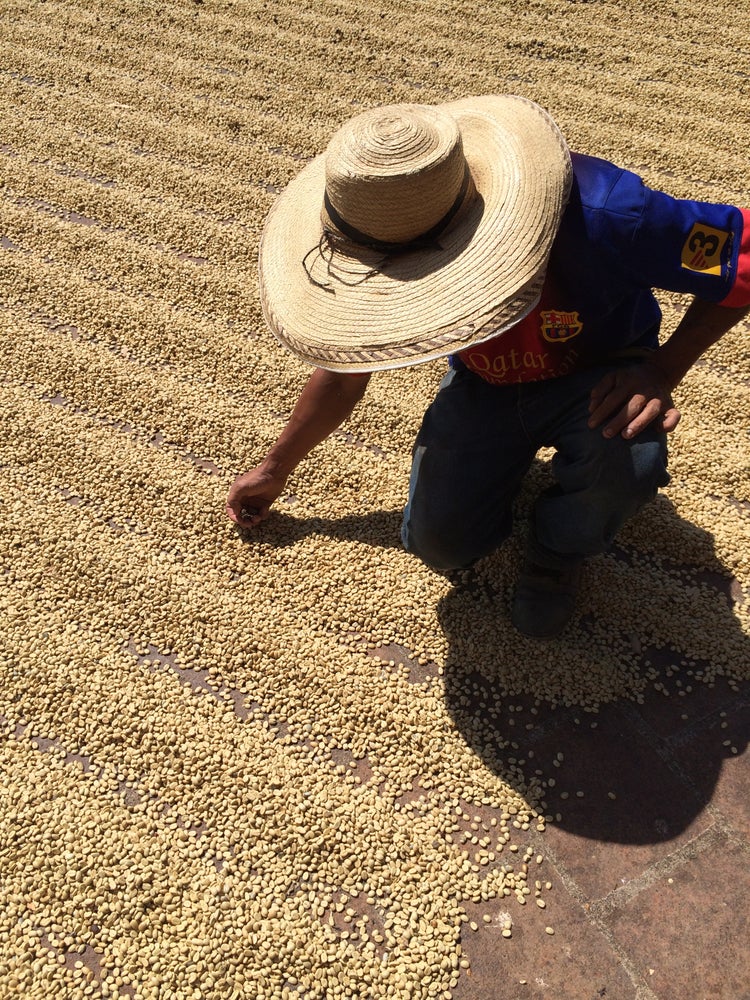
Omar, Dora and their 3 hired pickers selectively handpick ripe, red cherry and process it on their farm. They let picked cherry rest for about 24 hours before processing it. This settling time encourages some light fermentation that adds to the coffee’s flavor. They pulp cherry and place it in tanks to ferment for 24 hours. Following fermentation, they wash parchment in clean water and dry it in a mechanical dryer at low heat for 36 hours.
About Huila
The Huila region is one of the most well-known coffee growing areas of Colombia. The Department of Huila has a population of 1.125 million and is located in the southwest of the country. The capital of the department is Neiva, a city of about 380,000.
Along with Cauca and Nariño, Huila is one the three departments where the Colombian Massif is located. A massif is a group of mountain ranges and the Colombian Massif, which is known locally as Nudo de Almaguer, provides up to 70% of safe drinking and agricultural water for the Colombian population.
The Magdalena River, Colombia’s largest river, runs through the region, providing plenty of water for coffee farming and generating (directly and indirectly) up to 86% of Colombia's GDP. The mountain range also features the fertile volcanic soil so typical to the Andean Mountains.
Azahar
Azahar Colombia works directly with producers to source excellent, traceable coffee from Colombia’s best producing regions. They pride themselves on transparent relationships that improve incomes and quality.
In addition to their exporting arm, Azahar also operates a roastery in Quindío and several cafés in Bogotá that serve superb locally-produced coffees to Colombian consumers.
Coffee in Colombia
Colombia has been producing and exporting coffee renowned for their full body, bright acidity and rich aftertaste, since the early 19th century.
Colombia boasts a wide range of climates and geographic conditions that produce their own unique flavors in coffee. This also means that harvest times can vary quite a bit. In fact, between all its different regions, Colombia produces fresh crop nearly all year round.
The increasing focus on the specialty industry is changing the way traders and farmers do business. It is becoming more common for farmers to isolate the highest quality beans in their lots to market separately. These higher-quality lots are often sold under specific brands or stories.
Besides its wide variety of cup profiles, Colombia has quickly expanded its certification options over the past 10 years. The most common certifications available are Fairtrade, Rainforest Alliance and Organic.