
About This Coffee
Victor Barrera has planted about 4,500 Tabi variety trees on his farm, Finca El Tesoro. His adult children have chosen different paths but cultivating coffee has made it possible for Victor to support their ambitions.
Today, Victor cultivates coffee with his wife on their 3.5 hectares. The consummate host, Victor invites visitors to leave a message in the Finca El Tesoro guest book.
Harvest & Post-Harvest
Cherry is selectively handpicked by 8 to 15 hired pickers during the harvest. Victor pays strong prices per kilogram of coffee to incentivize the pickers to select only ripe, red cherry. Tabi has more space between branches and between the nodes of cherry, making it easier to select only the ripe, red cherry.
Once picks, Victor allows cherry to rest overnight before floating cherry to remove any underripes or damaged cherry. He pulped cherry and ferments coffee in tanks for about 36 hours before washing parchment in clean water. He lays parchment on raised beds to sundry and rakes it frequently to ensure even drying. It takes approximately 15 days for parchment to dry.
About Tabi
Tabi is a cross between Typica, Bourbon and Timor that was created by CENICAFE. It was released in 2002 and combines coffee leaf rust resistance with the good cup quality of Bourbon and Typica. Similar to those two parents, Tabi is tall with long branches. However, Tabi has slightly larger fruits and seeds and can be grown at high altitudes, and in high density, with up to 3,000 trees per hectare. The name comes from the word “tabi,” meaning “good” in Guambiano, the dialect of a native Colombian tribe.
About Huila
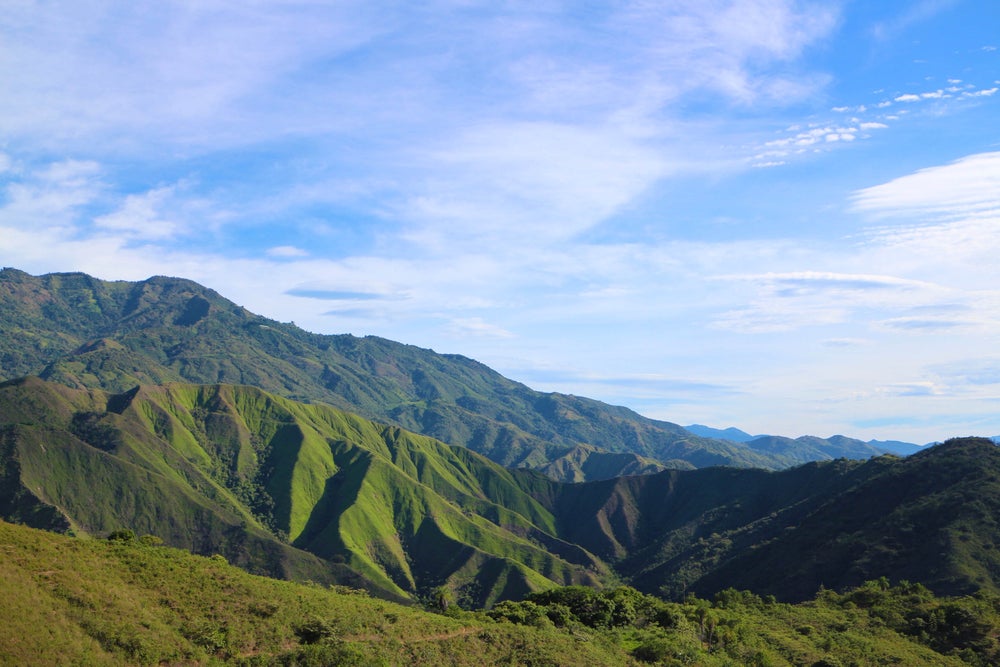
The Huila region is one of the most well-known coffee growing areas of Colombia. The Department of Huila has a population of 1.125 million and is located in the southwest of the country. The capital of the department is Neiva, a city of about 380,000.
Along with Cauca and Nariño, Huila is one the three departments where the Colombian Massif is located. A massif is a group of mountain ranges and the Colombian Massif, which is known locally as Nudo de Almaguer, provides up to 70% of safe drinking and agricultural water for the Colombian population.
The Magdalena River, Colombia’s largest river, runs through the region, providing plenty of water for coffee farming and generating (directly and indirectly) up to 86% of Colombia's GDP. The mountain range also features the fertile volcanic soil so typical to the Andean Mountains.
Coffee in Colombia
Colombia has been producing and exporting coffee renowned for their full body, bright acidity and rich aftertaste, since the early 19th century.
Colombia boasts a wide range of climates and geographic conditions that produce their own unique flavors in coffee. This also means that harvest times can vary quite a bit. In fact, between all its different regions, Colombia produces fresh crop nearly all year round.
The increasing focus on the specialty industry is changing the way traders and farmers do business. It is becoming more common for farmers to isolate the highest quality beans in their lots to market separately. These higher-quality lots are often sold under specific brands or stories.
Besides its wide variety of cup profiles, Colombia has quickly expanded its certification options over the past 10 years. The most common certifications available are Fairtrade, Rainforest Alliance and Organic.