
About This Coffee
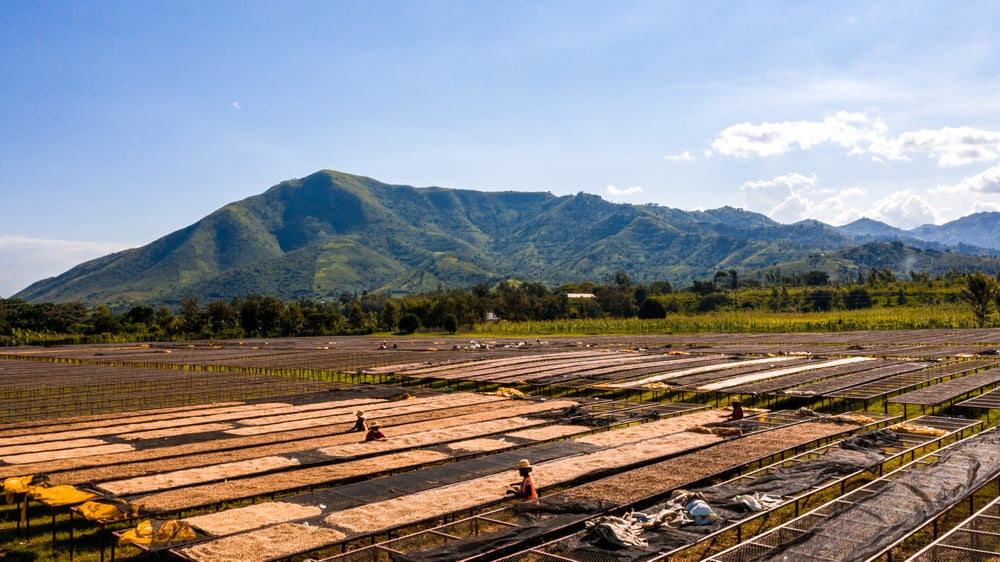
Kisiizi washing station is located in Rukungiri, western Uganda. Farmers in the region cultivate coffee at elevations of 1,500-1,900 meters above sea level, benefiting from fertile soils and an ideal microclimate. The station is named after the nearby village of Kisiizi.
Kisiizi is one of the main locations for our Quality Through Processing initiative in Western Uganda (and across Rwanda, Burundi and Kenya, as well!). The Initiative brings together processing experts and local teams across East Africa to explore innovative fermentation and post-harvest techniques. By developing standardized processing methods and sharing knowledge at origin, the project aims to unlock new cup profiles, improve consistency, create greater value for farmers and showcase the full potential of East African coffees.
This lot was processed using Smart Bev Boost PK-1, a yeast strain developed by Novonesis. The yeast is applied during fermentation to promote a more controlled and consistent process while producing very low levels of ethanol. It rapidly scavenges oxygen during fermentation, creating favorable conditions for controlled microbial activity. The result is a clean, well-defined cup profile that highlights the unique qualities of Ugandan coffee while lending greater consistency between batches.
Cultivation
Farmers in Rukungiri benefit from favorable growing conditions. In the east, the fertile volcanic soils surrounding Mount Elgon support productive coffee farms while in the west, the Rwenzori Mountains provide the high elevations ideal for Arabica cultivation.
Most farms are small, averaging 1-1.5 hectares and are primarily managed by family members. Coffee is typically the main cash crop, but many farmers also intercrop their coffee trees with plantains, bananas and other fruit.
Farmers within the Ugacof network, including farmers delivering to Kisiizi, also participate in a range of programs aimed at improving coffee crop yields and quality including seedling distribution, training in regenerative practices and assistance with gaining certification. Farmers in the region are also participating in the multi-stakeholder ORIGEN project.
Harvest & Post-Harvest
This unique lot has been processed using Smart Bev Boost PK-1, a yeast strain developed by Novonesis. The yeast is applied during fermentation to promote a more controlled and consistent process while enhancing the coffee's profile and was specially selected by our team after multiple trials to find the perfect inoculation yeast for the region/varieties. The processing imbues pronounced tropical fruit notes while preserving the coffee's natural sweetness.
Farmers selectively handpick ripe cherries and deliver them to the washing station. Upon arrival, the cherries are carefully hand-sorted to ensure only the highest quality fruit is selected. The chosen cherries are then pulped using minimal water to retain the mucilage before being transferred to barrels for fermentation with a yeast solution for 40-42 hours. Once fermentation is complete, the parchment is moved to raised beds for drying. During this stage, it is turned regularly to ensure even drying. The parchment is covered during the hottest part of the day and overnight to protect it from cracking and condensation. Workers also inspect the drying parchment regularly, removing any damaged or defective parchment to maintain quality.
UGACOF/Sucafina Uganda
Our partner, UGACOF/Sucafina Uganda is committed to improving quality in Uganda by building new washing stations and infrastructure and training personnel in the region. Collaborations with our FarmerHub program and our sustainability partner, the Kahawatu Foundation, are building upon our work to expand farmers’ access to better resources and better training. Our connections to our more established operations in nearby Rwanda, Burundi and Kenya offer us advice and a perspective steeped in a familiarity with East Africa.
The bulk of our work in Uganda is focused in the West, near the Rwenzori Mountains. The biggest difference between East (Mount Elgon) and West (Rwenzori) is that Mount Elgon is a more established and competitive market. We are excited to be at the forefront of the drive for enhancing coffee production infrastructure, developing the industry and becoming reliable partners for farmers in the Rwenzori Mountain region.
It is clear to us that the potential in this region might exceed our expectations and even the potential of the popular Mount Elgon region. With an ever-growing demand for high quality Arabicas and a sustained interest from roasters and coffee drinkers in the East African origins, we are very confident that, with diligence and effort, Western Ugandan coffees will be able to take their place alongside the other great East African coffees.
While the scale of work in regions like this can sometimes be overwhelming, we have a clear plan that steadily increases coffee quality.
Our first step is the one that leads to the most immediate and noticeable improvement: harvesting techniques. Due to a long history of home-processing and a lack of incentive for high quality, harvesting in the region is often semi- or entirely non-selective. Thanks to our extended network of cherry collection sites, we meet with farmers every day during the harvest season and can give real-time feedback that can impact the quality of the next day’s harvest. At the collection sites, we can insist on higher levels of care and reward meticulous picking. Though we’re still in the early years, we have seen a clear difference in quality from one year to another and even from the first week of the harvest to the last.
Future steps will include working with farmers to improve their access to materials and knowledge of better farming practices. This means making fertilizer more accessible, encouraging farmers to plant shade canopies and more. We’re planning on building demonstration plots, input access sites across the region and training a new generation of skilled washing station staff. We know it will take time, but we have a strategy and are committed to realizing this vision.
Coffee in Uganda
Uganda is the native home to one species of Robusta, and commercial coffee production in the country goes back to the beginning of the 20th century.
Our partner, UGACOF/Sucafina Uganda is committed to improving quality in Uganda by building new washing stations and infrastructure and training personnel in the region. Collaborations with our FarmerHub program and our sustainability partner, the Kahawatu Foundation, are building upon our work to expand farmers’ access to better resources and better training. Our connections to our more established operations in nearby Rwanda, Burundi and Kenya offer us advice and a perspective steeped in a familiarity with East Africa.
The bulk of our work in Uganda is focused in the West, near the Rwenzori Mountains. The biggest difference between East (Mount Elgon) and West (Rwenzori) is that Mount Elgon is a more established and competitive market. We are excited to be at the forefront of the drive for enhancing coffee production infrastructure, developing the industry and becoming reliable partners for farmers in the Rwenzori Mountain region.
It is clear to us that the potential in this region might exceed our expectations and even the potential of the popular Mount Elgon region. With an ever-growing demand for high quality Arabicas and a sustained interest from roasters and coffee drinkers in the East African origins, we are very confident that, with diligence and effort, Western Ugandan coffees will be able to take their place alongside the other great East African coffees.