
About This Coffee
Kefiyalew Mekuria is a third-generation farmer who inherited his farm from his father. In 2019, Kefiyalew began processing cherry on his farm instead of selling his cherry to local mills. By drying cherry on his farm, he’s able to capture more value addition and increase his overall income. His small processing set up allow him to produce about 40 bags of exportable coffee.
Kefiyalew’s 2.2 hectare farm is located at 2,030 meters above sea level. The high altitude combined with the nutrient-rich soil create the ideal conditions for producing high-quality specialty coffee.
Harvest & Post-Harvest
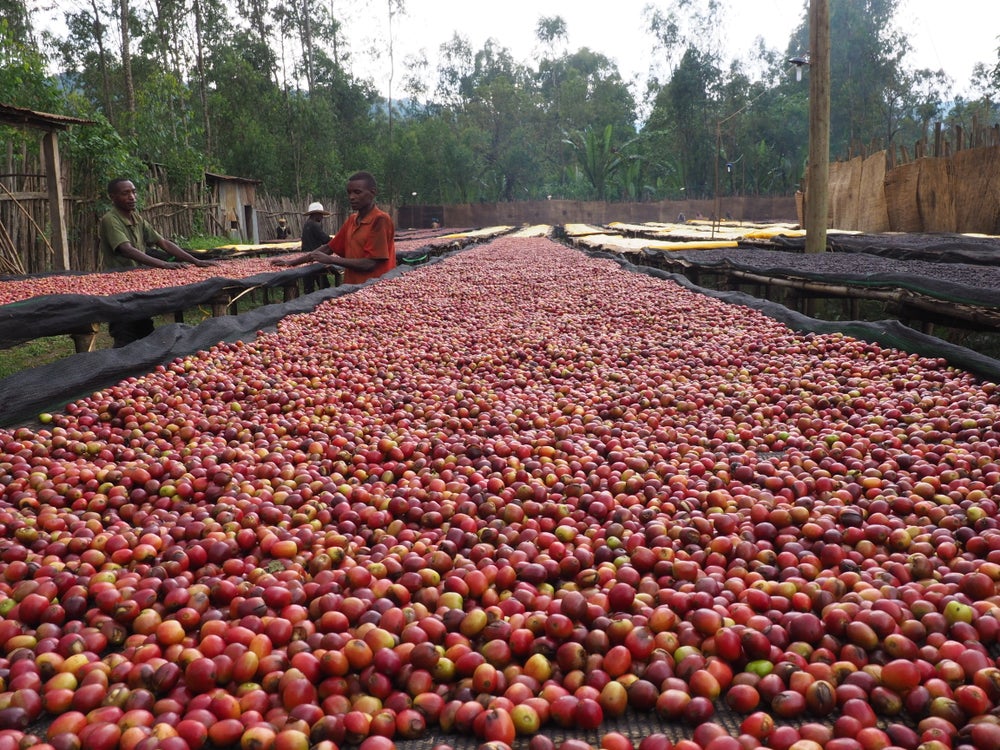
Kefiyalew selectively handpicks ripe, red cherry and processes it on his farm. Cherry is laid in a single layer on raised drying beds. Kefiyalew rakes cherry every hour to ensure even drying. He also covers cherry at midday and at sunset to protect cherry from high heat and to prevent condensation. Once dry, Kefiyalew stores coffee at a warehouse on his farm for 2.5 months before transporting it to Addis Ababa for dry milling.
Coffee in Ethiopia
While Ethiopia is famous as coffee’s birthplace, today it remains a specialty coffee industry darling for its incredible variety of flavors. While full traceability has been difficult in recent history, new regulations have made direct purchasing possible. We’re partnering directly with farmers to help them produce top quality specialty lots that are now completely traceable, adding value for farmers and roasters, alike.
The exceptional quality of Ethiopian coffee is due to a combination of factors. The genetic diversity of coffee varieties means that we find a diversity of flavor, even between (or within) farms with similar growing conditions and processing. In addition to varieties, processing methods also contribute to end quality. The final key ingredients for excellent coffee in Ethiopia are the producing traditions that have created the genetic diversity, processing infrastructure and great coffee we enjoy today.
Most producers in Ethiopia are smallholders, and the majority continue to cultivate coffee using traditional methods. As a result, most coffee is grown with no chemical fertilizer or pesticide use. Coffee is almost entirely cultivated, harvested and dried using manual systems.