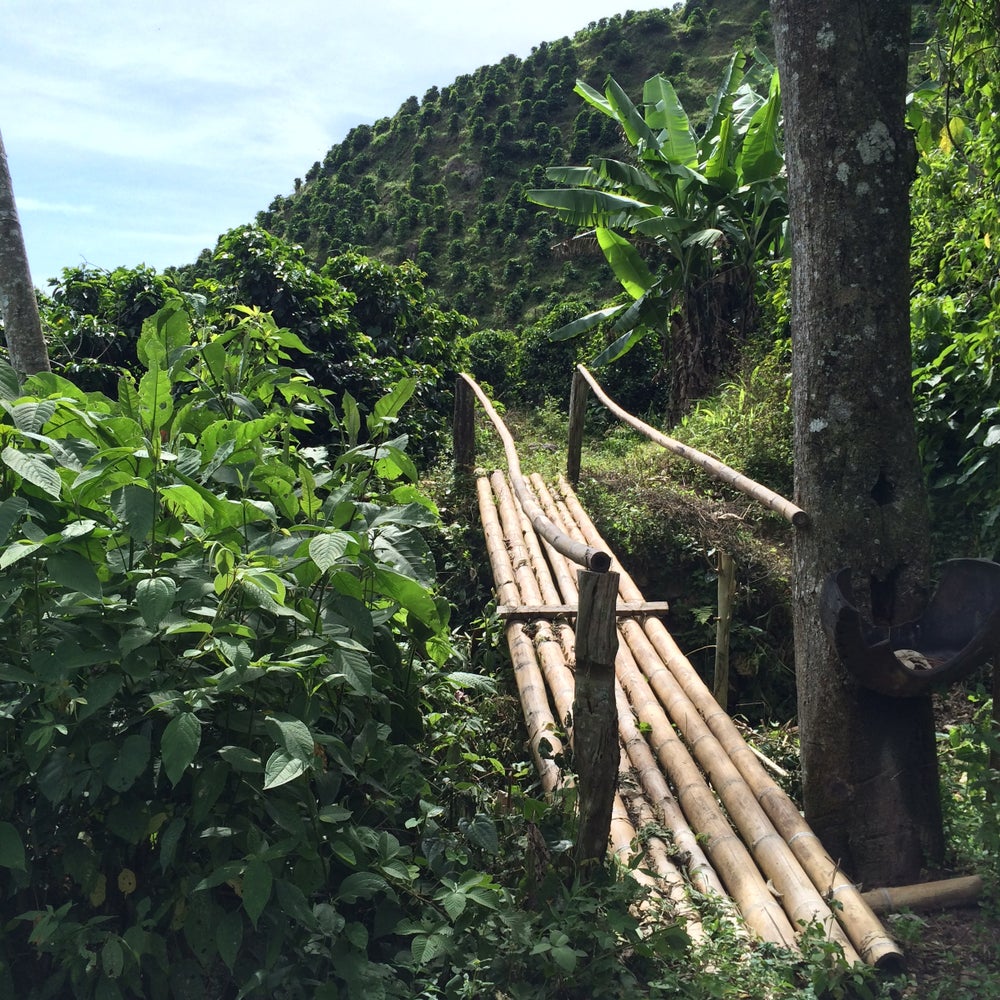

Cultivation
Colombia boasts a wide range of microclimates and geographical conditions that produce the unique flavors so loved in Colombian coffees.
Harvest & Post-Harvest
Most farmers conduct primary processing (pulping and drying) on their own farms. Processing infrastructure varies widely but there are noticeable similarities between farms of similar sizes or regions. Broadly speaking, most farms have traditionally used the Fully washed method and utilize dry pulping to minimize water usage.
Drying processes in Colombia are innovative and varied. Farmers may spread their parchment across the flat roofs (elvas) of their houses to dry slowly – sometimes in the shade but more often in the sun.
In parts of Antioquia, drying ‘drawers’ are used. These are sets of moveable drying screens that can be pulled out from under the house or storage sheds when the weather is warm and pushed back under shelter when it rains.
Polytunnels and parabolic beds are also commonly used, particularly in high altitude and cooler temperatures zones. These structures are usually raised beds constructed similarly to mini-greenhouses with plastic sheeting stretched over an arched frame and openings at both ends to ensure airflow. These structures protect parchment from wet weather conditions while the even airflow allows for drying even in humid conditions.
As Colombian farmers are increasingly accessing specialty markets, they are producing more Naturals and Honeys of exceptional quality. And these processes are not limited to a select few. Along with Naturals and Honeys, experimentally processed coffees are now coming from a variety of regions.
Coffee in Colombia
Colombia has been producing and exporting coffee renowned for their full body, bright acidity and rich aftertaste, since the early 19th century.
Colombia boasts a wide range of climates and geographic conditions that produce their own unique flavors in coffee. This also means that harvest times can vary quite a bit. In fact, between all its different regions, Colombia produces fresh crop nearly all year round.
The increasing focus on the specialty industry is changing the way traders and farmers do business. It is becoming more common for farmers to isolate the highest quality beans in their lots to market separately. These higher-quality lots are often sold under specific brands or stories.
Besides its wide variety of cup profiles, Colombia has quickly expanded its certification options over the past 10 years. The most common certifications available are Fairtrade, Rainforest Alliance and Organic.