About This Coffee
Founded in 2000, Kapkiyai Multipurpose Cooperative Society Ltd started with just 12 members seeking better prices for their coffee. The cooperative membership has grown to a current registered total of 1,007 members, with 824 actively participating. Among these, 346 are women (up from 324), and 271 are youth (up from 119).
The 2023/2024 coffee season saw an increased volume of coffee produced, thanks to increased coffee farming adoption and expansion of coffee-growing areas using agroforestry models. Additionally, the Farmer Cooperative Society (FCS) has made efforts to increasingly reach young farmers, which has advanced the project further. The cooperative also runs a nursery with various shade tree seedlings and coffee tree varieties.
Kapkiyai is one of the selected producer organizations benefiting from the Trace Kenya Initiative* an agronomic capacity-building program run by the Solidaridad Network, which assists farmers in adopting climate-smart practices, agroforestry, intercropping, and organic agriculture. The program is implemented in the west of Kenya (Kericho, Nandi, and Bungoma Counties), focusing on women and youth participation in coffee.
Kapkiyai has previously worked with Techoserve and other partners to develop a Women in Coffee program, focusing on initiatives such as gender inclusivity. This led to increased production, women's empowerment, and increased family members' participation in coffee farm activities. The Women in Coffee program continues with 346 participants.
Cultivation
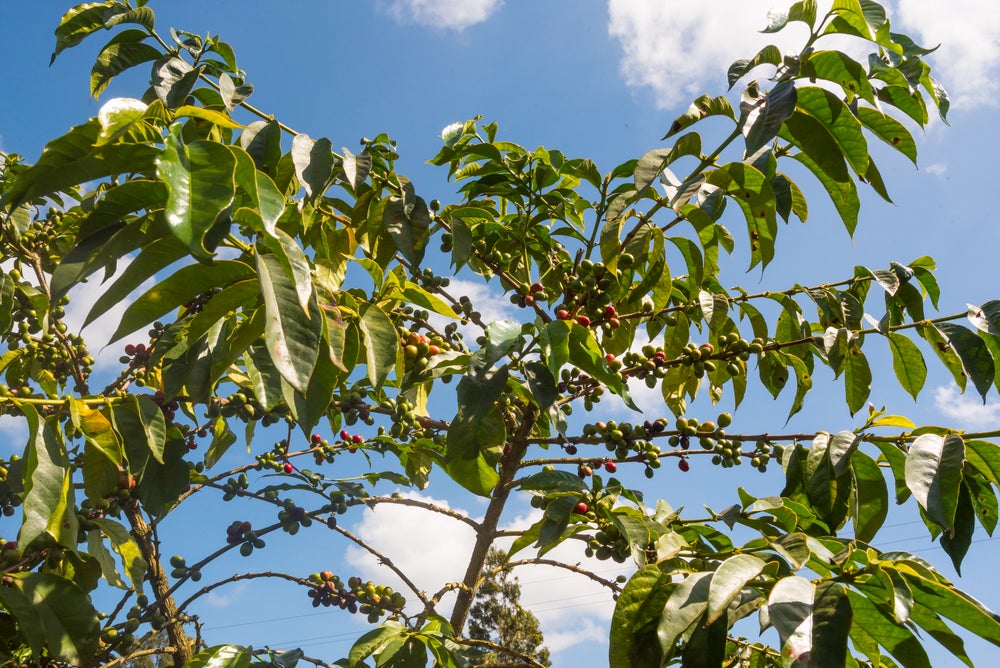
Farmers delivering to Kapkiyai cultivate SL28, SL34, Batian and Ruiru11 in small coffee gardens that are, on average, about 200 trees. ‘SL’ varieties are cultivars originally released by Scott Agricultural Laboratories (SAL) in the 1930s and 1940s. They soon became the go-to trees for many growers in Kenya due to their deep root structure, which allows them to maximize scarce water resources and flourish even without irrigation. They are cultivated with a serious eye towards sustainability and Good Agricultural Practices, with minimal environmental impact where possible.
Harvest & Post-Harvest
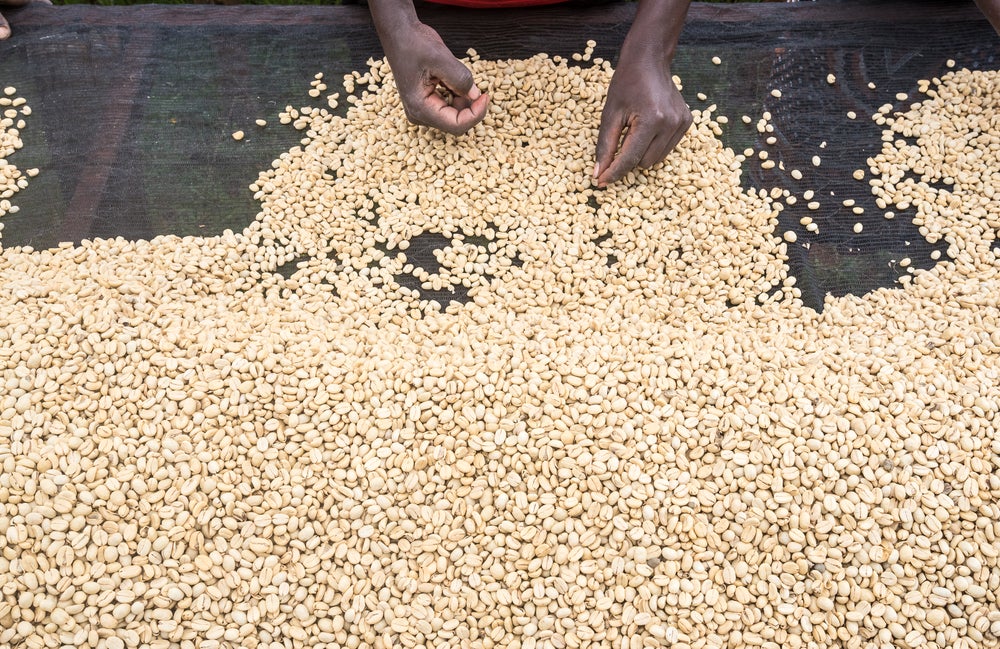
Member farmers selectively handpick ripe, red cherries and deliver them to the cooperative’s washing station. At intake, a cherry clerk oversees delivery and ensures the quality of the cherry. Cherries are hand-sorted, floated, and weighed, and accepted cherries are pulped. The coffee is then fermented, and the parchment is washed in clean water before being laid on raised beds to dry. Workers frequently rake the parchment to ensure even drying, taking approximately 14 days.
AA Grade
Kenyan coffees are classified by size. AA beans are the largest size. AA grade coffees are those that are 17/18 screen size, meaning that they are larger than 7.2 millimeters.
About Ruiru 11
Ruiru 11, a hybrid of Catimor and SL cultivars, is both Coffee Berry Disease (CBD) and Coffee Leaf Rust (CLR) resistant. Plus, it can be planted at a much higher density than the SL varieties, making optimal use of small plots of land.
Ruiru 11 has slowly ‘taken root’ across most of Kenya’s coffee growing landscape. The only issues were that with a shallower root structure, many farmers found the plant less hardy in drought conditions, and the trees required a more intense feeding program. Over time, farmers have found that by grafting Ruiru-11 to SL varieties they could take advantage of SL trees’ expansive root system and still reap the increased yields and higher immunity to disease of Ruiru-11.
Due to the grafted Ruiru-11’s growing popularity, most farms in Kenya today, both big and small, have a mixture of Ruiru-11 and SL varieties. As SL trees age, many farmers are opting to turn more towards Ruiru-11 (or the grafting solution) thanks to its ease of use and higher resistance to diseases.
Source: https://varieties.worldcoffeeresearch.org/varieties/ruiru-11 & https://sucafina.com/na/news/think-you-know-kenya-coffee-varieties-think-again
About Batian
Developed by Kenya's Coffee Research Institute in 2010, Batian is named after the highest peak on Mt. Kenya and is resistant to both coffee berry disease (CBD) and coffee leaf rust (CLR). The variety has the added benefit of early maturity – cropping after only two years. Some challenges (such as vegetative structure) have prevented it from becoming widespread so far, but its popularity is certainly growing.
About SL28 & SL34
SL28 and SL34 were two of the cultivars released by Scott Agricultural Laboratories (SAL) during the height of SAL’s research in Kenya in the 1930s and 1940s. They soon became the cultivars of choice for most growers thanks to their deep root structure that allows them to maximize scarce water resources and flourish even without irrigation. SL varieties also had higher yields than the French Bourbon rootstock that they replaced and were known to be somewhat more disease resistant.
Coffee in Kenya
Though coffee growing had a relatively late start in Kenya, the industry has gained and maintained a impressive reputation. Since the start of production, Kenyan coffee has been recognized for its high-quality, meticulous preparation and exquisite flavors. Our in-country sister company, Sucafina Kenya, works with farmers across the country to ensure these exceptional coffees gain the accolades they deserve.
Today, more than 600,000 smallholders farming fewer than 5 acres compose 99% of the coffee farming population of Kenya. Their farms cover more than 75% of total coffee growing land and produce nearly 70% of the country’s coffee. These farmers are organized into hundreds of Farmer Cooperative Societies (FCS), all of which operate at least one factory. The remainder of annual production is grown and processed by small, medium and large land estates. Most of the larger estates have their own washing stations.
Most Kenyan coffees are fully washed and dried on raised beds. The country still upholds its reputation for high quality and attention to detail at its many washing stations. The best factories employ stringent sorting practices at cherry intake, and many of them have had the same management staff in place for years.