
About This Coffee
Gotae Sodu washing station receives cherry from smallholder farmers cultivating coffee in the dense protected forests surrounding the station. Since the forest is protected by the government and human intervention must be minimal, smallholders act more as stewards of the wild coffee growing in the area than as active farmers.
Gotae Sodu washing station is owned and operated by Abebe Mulugeta Kassa Genet.
Cultivation
The semi-wild nature of these trees means that many of the varieties grown in the forest are unique and are not cultivated anywhere else. In fact, some varieties grown in one section of the forest may exist only there and may be substantially different from those grown in another section. This genetic diversity leads to some extraordinary flavors in this coffee and others grown in forested conditions.
Harvest & Post-Harvest
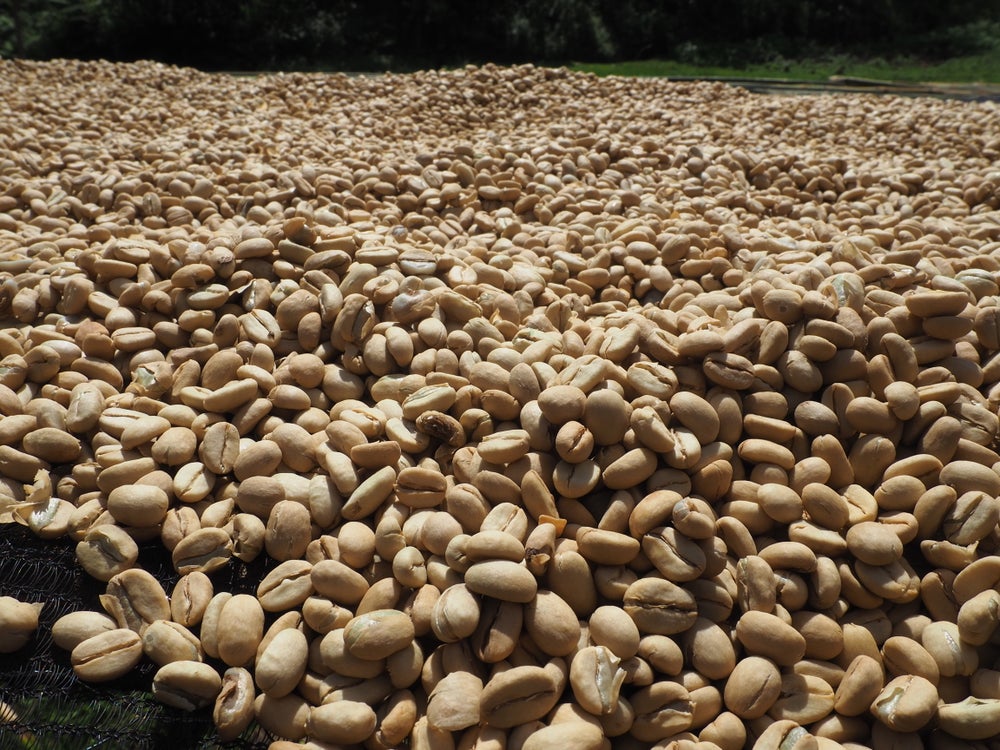
Ripe, red cherry is selectively handpicked by smallholders and delivered the Gotae Sodu washing station. At intake, cherry is pulped on a drum pulper and fermented in water for 24 to 60 hours. Following fermentation, coffee is washed in clean water and run through concrete grading canals. Then, parchment soaks in clean water for 5 hours. Parchment is laid on raised beds to sundry. It’s raked frequently to ensure even drying. It takes approximately 12 days for parchment to dry. Parchment is rested in a warehouse for 1 to 3 months before being dry milled and prepared for export at a mill in Addis Ababa.
About Guji
Guji coffee has only recently been distinguished from neighboring Sidamo and Yirgacheffe. However, due to their incredible quality and unique profiles, they are quickly gaining international recognition.
The Guji region receives ample rainfall and is marked by steep mountainous terrain: perfect conditions to support the vast array of coffee grown here.
Ethiopia Grade 1
Grades in Ethiopia depend on visual inspection for defects and on cup quality. Grade 1 is considered the highest quality coffee. Grade 1 and 2 are considered specialty coffee, grades 3-9 are classified as commercial coffee. Grade 1 is free of cup faults and taints and has zero quakers.
About Sibu Coffee Producers and Exporters
Sibu Coffee Producers and Exporters source cherry from their own farm, farmers delivering to their 3 washing stations and farmers, washing stations or collectors selling dried coffee to Sibu. Each of their washing stations supports 20 permanent employees and 180 season workers.
Coffee in Ethiopia
While Ethiopia is famous as coffee’s birthplace, today it remains a specialty coffee industry darling for its incredible variety of flavors. While full traceability has been difficult in recent history, new regulations have made direct purchasing possible. We’re partnering directly with farmers to help them produce top quality specialty lots that are now completely traceable, adding value for farmers and roasters, alike.
The exceptional quality of Ethiopian coffee is due to a combination of factors. The genetic diversity of coffee varieties means that we find a diversity of flavor, even between (or within) farms with similar growing conditions and processing. In addition to varieties, processing methods also contribute to end quality. The final key ingredients for excellent coffee in Ethiopia are the producing traditions that have created the genetic diversity, processing infrastructure and great coffee we enjoy today.
Most producers in Ethiopia are smallholders, and the majority continue to cultivate coffee using traditional methods. As a result, most coffee is grown with no chemical fertilizer or pesticide use. Coffee is almost entirely cultivated, harvested and dried using manual systems.