
About This Coffee
Almaz Mamo cultivates coffee at Wegida Farm in Dila, Yirgacheffe. She grows a range of local landraces and JARC varieties, which have all evolved to thrive in Ethiopia’s climatic conditions.
Working with Sucafina Ethiopia, Almaz gets technical support and training that help her make Wegida Farm more sustainable and the coffee she produces more high-quality. Her Natural lot is bursting with berries, stone fruit and bittersweet chocolate.
Cultivation
Almaz uses sustainable agroforestry practices to cultivate coffee. Her farm is organic-by-default. In addition to coffee, she also grows false banana (enset), fruit trees and legumes. Fruit and timber trees provide shade for growing coffee and legumes fix nitrogen, a vital nutrient for growing all plants.
Harvest & Post-Harvest
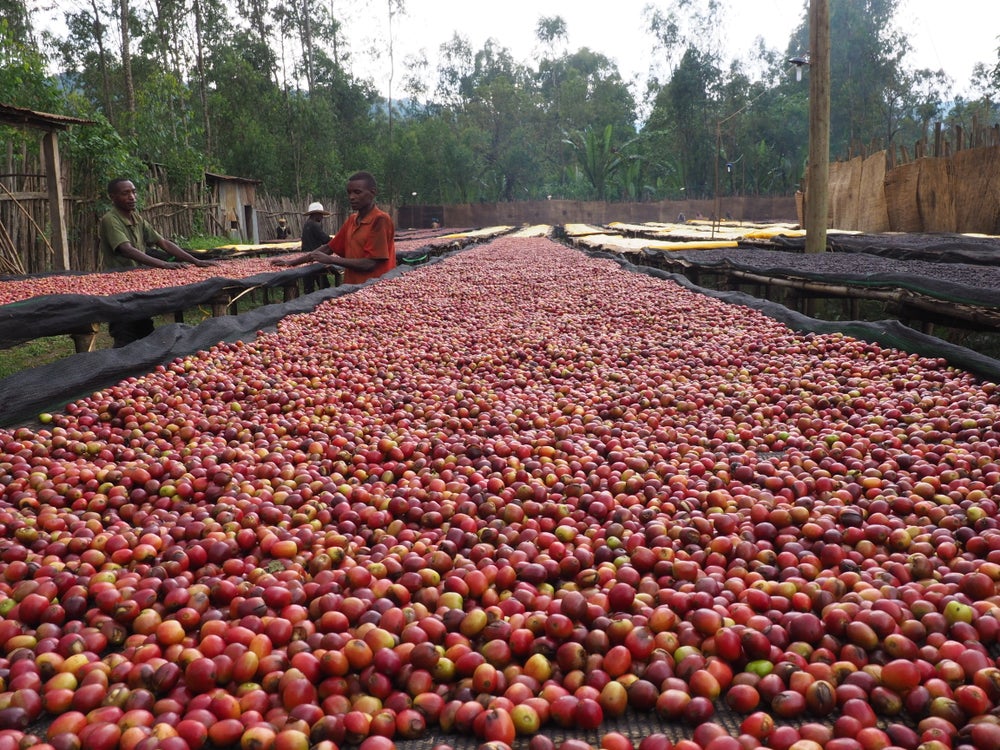
Almaz selectively handpicks ripe, red cherry and processes it on her farm. She lays cherry on raised beds to sun dry and rakes cherry frequently to ensure even drying. It takes approximately 2 to 3 weeks for cherry to dry. Once dry, Almaz bags cherry and stores it in a warehouse on the farm for about 5 months before it’s transported to the dry mill for processing.
Coffee in Ethiopia
While Ethiopia is famous as coffee’s birthplace, today it remains a specialty coffee industry darling for its incredible variety of flavors. While full traceability has been difficult in recent history, new regulations have made direct purchasing possible. We’re partnering directly with farmers to help them produce top quality specialty lots that are now completely traceable, adding value for farmers and roasters, alike.
The exceptional quality of Ethiopian coffee is due to a combination of factors. The genetic diversity of coffee varieties means that we find a diversity of flavor, even between (or within) farms with similar growing conditions and processing. In addition to varieties, processing methods also contribute to end quality. The final key ingredients for excellent coffee in Ethiopia are the producing traditions that have created the genetic diversity, processing infrastructure and great coffee we enjoy today.
Most producers in Ethiopia are smallholders, and the majority continue to cultivate coffee using traditional methods. As a result, most coffee is grown with no chemical fertilizer or pesticide use. Coffee is almost entirely cultivated, harvested and dried using manual systems.