
About This Coffee
About 1,600 smallholder farmers cultivate local landraces and JARC varieties in Shantawene, Sidamo. Their farms are situated in the foothills of the Bombe mountains. The mountains are towering, with farms reaching heights of 1,950 meters above sea level and beyond. Soil is rich and the landscape is verdant. Most coffee is grown under shade.
Harvest & Post-Harvest
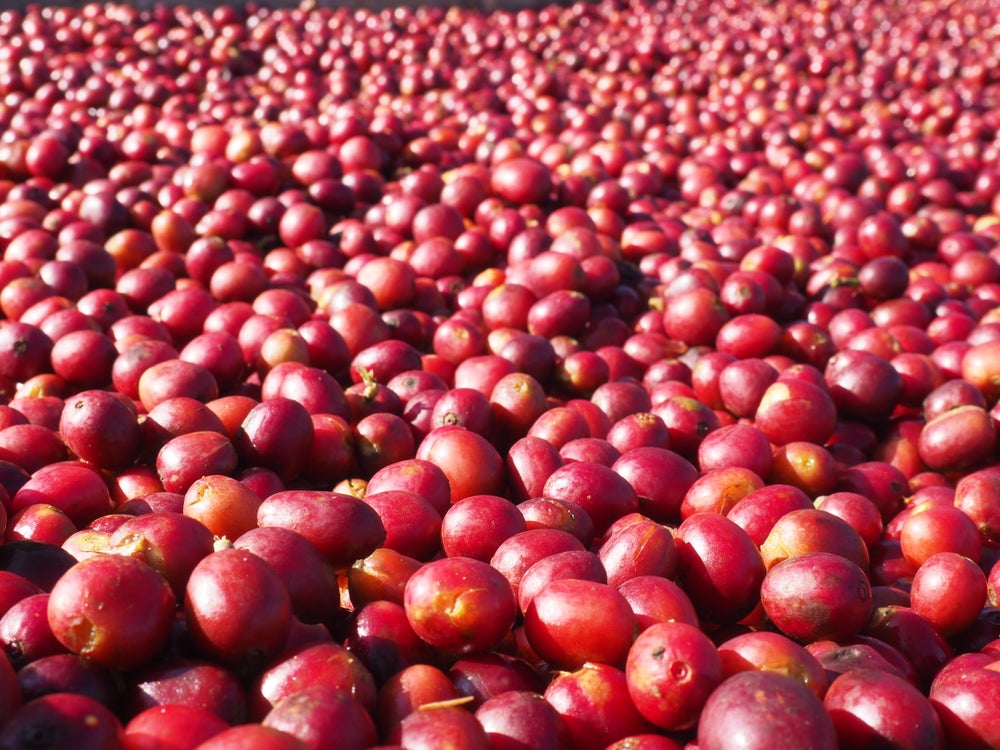
Farmers selectively handpick ripe, red cherry and process it on their own farms. Most farmers use a disc pulper to pulp cherry and then ferment it in buckets, bags or tanks. Following fermentation, they wash parchment in clean water and then lay it to dry on raised beds or on patios. They rake parchment to ensure even drying. It takes approximately 10 to 15 days for parchment to dry.
Coffee in Ethiopia
While Ethiopia is famous as coffee’s birthplace, today it remains a specialty coffee industry darling for its incredible variety of flavors. While full traceability has been difficult in recent history, new regulations have made direct purchasing possible. We’re partnering directly with farmers to help them produce top quality specialty lots that are now completely traceable, adding value for farmers and roasters, alike.
The exceptional quality of Ethiopian coffee is due to a combination of factors. The genetic diversity of coffee varieties means that we find a diversity of flavor, even between (or within) farms with similar growing conditions and processing. In addition to varieties, processing methods also contribute to end quality. The final key ingredients for excellent coffee in Ethiopia are the producing traditions that have created the genetic diversity, processing infrastructure and great coffee we enjoy today.
Most producers in Ethiopia are smallholders, and the majority continue to cultivate coffee using traditional methods. As a result, most coffee is grown with no chemical fertilizer or pesticide use. Coffee is almost entirely cultivated, harvested and dried using manual systems.