
About This Coffee
Sadayana is named for the Sundanese word for “working together.” The Sunda are one of the three largest ethnic groups on Java. The area where Sadayana washing station is located is majority Sundanese.
Sucafina financed the construction of the Sadayana CPU in 2025. The facility serves over 1,100 contributing farmers from the Sunda ethnic group who deliver cherry for processing, while providing access to Sucafina services, including agronomic support and affordable seedlings. These initiatives have helped improve yields and coffee quality over the years.
Dedication to cultivation and processing resulting in an expressive cup. For this Fully washed lot, expect classic notes of tobacco, balanced with stone fruit, lemon and good sweetness.
Cultivation
Farmers in the region grow coffee at altitudes ranging from 1,300 to 1,800 meters above sea level. Most farms are small, averaging 0.5 to 1 hectare. Farmers in the region cultivate Ateng, Andung Sari and Typica varieties in shaded agroforestry zones with nutrient-rich volcanic soils. These conditions create an ideal microclimate, resulting in coffee of optimal quality. Over the years, Sucafina’s agronomic support and provision of seedlings have helped farmers improve yields and cherry quality.
Harvest & Post-Harvest
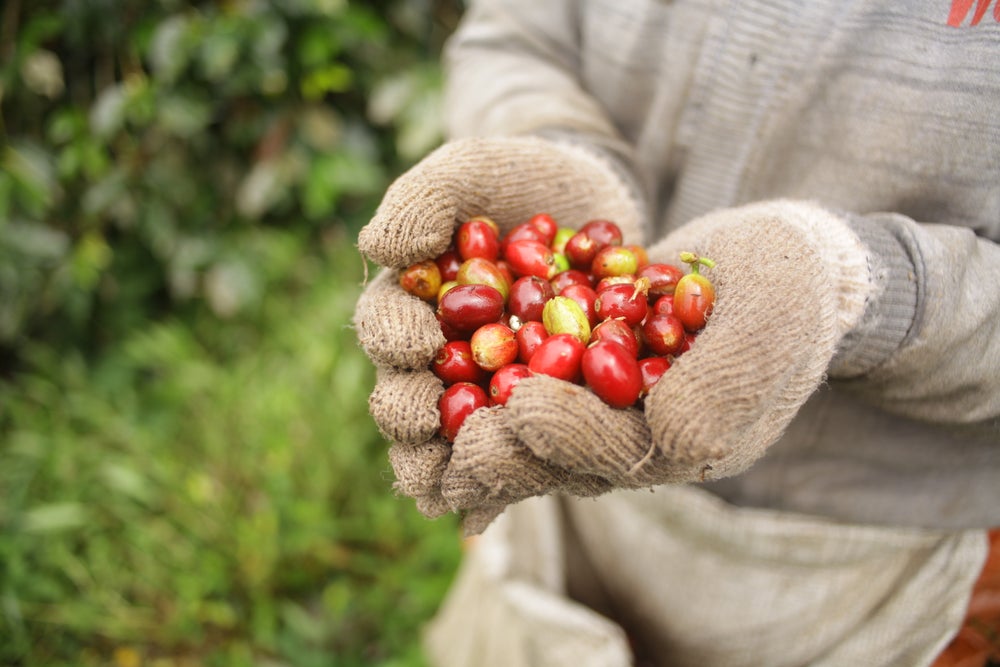
Farmers selectively handpick ripe, red cherries and deliver them to Sadayana facility (operated by PT Sucafina Indonesia). At Sadayana, strict protocols are in place to ensure the delivered cherries are in good condition, with no defective, overripe or underripe fruit. Cherries are then washed and floated to ensure optimal quality.
Selected cherries are fermented for 72 hours before being pulped. Following fermentation, parchment is washed in clean water and then laid to dry on shaded raised beds. Parchment is raked frequently to ensure even drying. It takes 7 to 15 days for parchment to dry.
Coffee in Indonesia
Indonesia has a long coffee producing history, but recently their coffees have been overlooked by the specialty market. Thanks to our innovative and ever-expanding supply chain, we are proud to bring you high-quality coffees from many of Indonesia’s unique regions, accompanied by in-depth traceability information.
Indonesia is perhaps best known for its unique wet hulling process (giling basah). Though its exact origins are unclear, wet hulling most likely originated in Aceh during the late 1970s.
Wet hulling’s popularity can be attributed to producers’ need for prompt payments. It was also adopted specifically by many producers who lacked the drying infrastructure that was needed to shelter drying parchment from the high humidity and inconsistent rainfall typical in Sumatra. At higher elevations with constant humidity and unpredictable rainfall, drying can prove to be slow, risky and difficult.