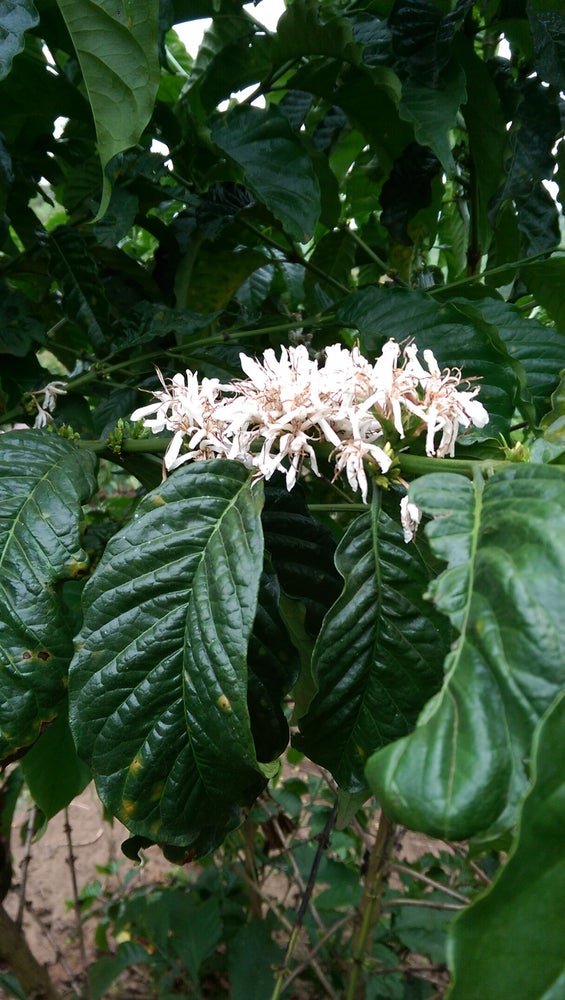

About This Coffee
Our sister company UGACOF (Sucafina in Uganda) saw the potential to produce great coffee at Kisiizi station. The mill and surrounding farmers faced difficult odds where everything from the mill’s physical isolation to the poor transportation infrastructure and the timing of the rainy period seemed to thwart expanding coffee production in the region. However, Sucafina Uganda saw the immense potential of the microclimate, high altitude of 1,800+ meters above sea level and the incredible commitment of the farmers to learning and improving cherry quality.
UGACOF (Sucafina in Uganda) works directly with every farmer who delivers coffee to make coffee highly traceable.
Cultivation
The rolling green hills of Nyakishenyi reach altitudes above 1,800 meters and are located near the Bwindi forest, which is home to 800 Mountain Gorillas, the larger of only two remaining wild populations of this endangered species. The subregion sits near the even taller Virunga volcanoes and Sabyinyo Mountain at the intersection of Rwanda, Democratic Republic of Congo and Uganda. The Virunga volcanoes, a chain stretching over 80 kilometers, mean fertile volcanic soil throughout the region.
Most of the smallholders farmers with whom UGACOF (Sucafina in Uganda) works are from the Bakiga community. The Bakiga people are a Bantu community who live mostly in the Nyakishenyi subregion. As Ugacof expanded into the region, they worked hard to gain acceptance from the local communities who were wary of the short-term and unsustainable projects that, in the last decade, had frequently disappointed and hurt them.
A Ugacof team took the months before the coffee season to meet with Bakiga farmers and understand their needs, challenges and community structures. The 1,600 farmers who registered selected 50 lead farmers to represent the villages in the 150 square kilometer area.
Lead farmers helped teams on the ground father information about drying centers, collection programs, agronomic practices and optimal harvesting times on a daily basis.
UGACOF/Sucafina Uganda
Our partner, UGACOF/Sucafina Uganda is committed to improving quality in Uganda by building new washing stations and infrastructure and training personnel in the region. Collaborations with our FarmerHub program and our sustainability partner, the Kahawatu Foundation, are building upon our work to expand farmers’ access to better resources and better training. Our connections to our more established operations in nearby Rwanda, Burundi and Kenya offer us advice and a perspective steeped in a familiarity with East Africa.
The bulk of our work in Uganda is focused in the West, near the Rwenzori Mountains. The biggest difference between East (Mount Elgon) and West (Rwenzori) is that Mount Elgon is a more established and competitive market. We are excited to be at the forefront of the drive for enhancing coffee production infrastructure, developing the industry and becoming reliable partners for farmers in the Rwenzori Mountain region.
It is clear to us that the potential in this region might exceed our expectations and even the potential of the popular Mount Elgon region. With an ever-growing demand for high quality Arabicas and a sustained interest from roasters and coffee drinkers in the East African origins, we are very confident that, with diligence and effort, Western Ugandan coffees will be able to take their place alongside the other great East African coffees.
While the scale of work in regions like this can sometimes be overwhelming, we have a clear plan that steadily increases coffee quality.
Our first step is the one that leads to the most immediate and noticeable improvement: harvesting techniques. Due to a long history of home-processing and a lack of incentive for high quality, harvesting in the region is often semi- or entirely non-selective. Thanks to our extended network of cherry collection sites, we meet with farmers every day during the harvest season and can give real-time feedback that can impact the quality of the next day’s harvest. At the collection sites, we can insist on higher levels of care and reward meticulous picking. Though we’re still in the early years, we have seen a clear difference in quality from one year to another and even from the first week of the harvest to the last.
Future steps will include working with farmers to improve their access to materials and knowledge of better farming practices. This means making fertilizer more accessible, encouraging farmers to plant shade canopies and more. We’re planning on building demonstration plots, input access sites across the region and training a new generation of skilled washing station staff. We know it will take time, but we have a strategy and are committed to realizing this vision.
Coffee in Uganda
Uganda is the native home to one species of Robusta, and commercial coffee production in the country goes back to the beginning of the 20th century.
Our partner, UGACOF/Sucafina Uganda is committed to improving quality in Uganda by building new washing stations and infrastructure and training personnel in the region. Collaborations with our FarmerHub program and our sustainability partner, the Kahawatu Foundation, are building upon our work to expand farmers’ access to better resources and better training. Our connections to our more established operations in nearby Rwanda, Burundi and Kenya offer us advice and a perspective steeped in a familiarity with East Africa.
The bulk of our work in Uganda is focused in the West, near the Rwenzori Mountains. The biggest difference between East (Mount Elgon) and West (Rwenzori) is that Mount Elgon is a more established and competitive market. We are excited to be at the forefront of the drive for enhancing coffee production infrastructure, developing the industry and becoming reliable partners for farmers in the Rwenzori Mountain region.
It is clear to us that the potential in this region might exceed our expectations and even the potential of the popular Mount Elgon region. With an ever-growing demand for high quality Arabicas and a sustained interest from roasters and coffee drinkers in the East African origins, we are very confident that, with diligence and effort, Western Ugandan coffees will be able to take their place alongside the other great East African coffees.