
About This Coffee
This coffee is produced by smallholder farmers in Guatemala’s Antigua region. Antigua has rich volcanic soil with plenty of sunlight, high altitudes, low humidity and cool nights, which together help make the ideal conditions for cultivating sweet, dense cherry. Agua, Fuego and Acatenango are Antigua’s three volcanoes and Fuego is still active, occasionally contributing a fresh layer of mineral-rich volcanic ash to the already-rich soil.
The EA (ethyl acetate) decaffeination process magnifies sweetness and acidity, producing an excellent decaffeinated coffee.
Harvest & Post-Harvest
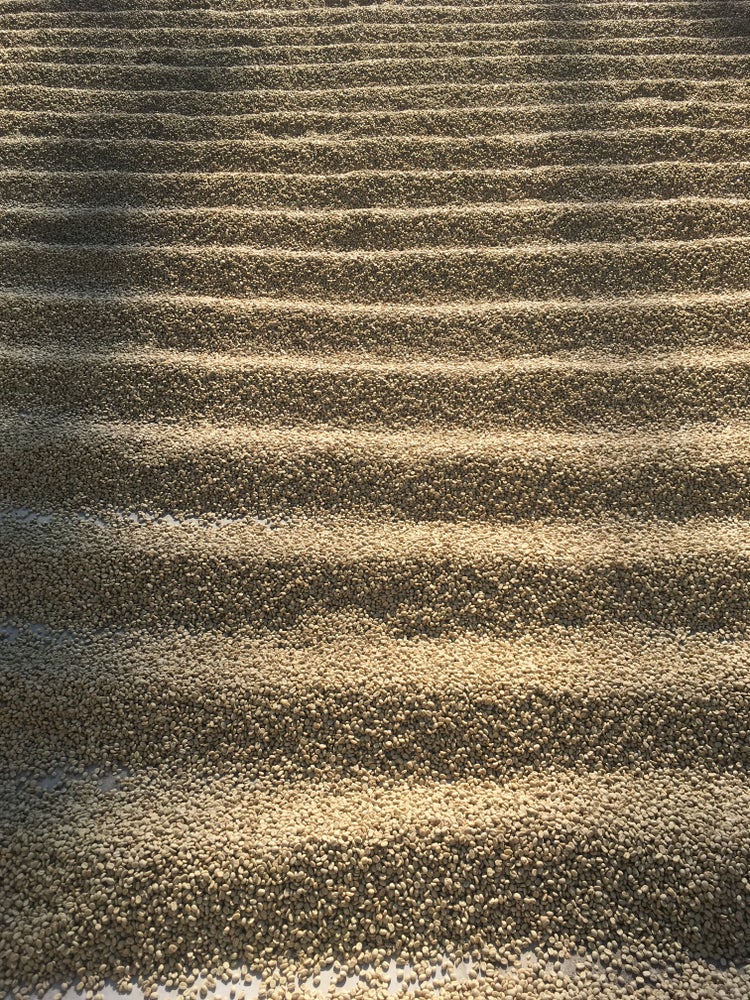
Most farms are small, about 1 to 5 hectares each, and most labor is done by the family. Some producers may hire additional labor during the harvest season to ensure only ripe, red cherry is picked. Cherry is typically handpicked and processed on individual farms. Producers use small mechanized or hand-crank pulpers to pulp cherry and then place it in tanks to ferment. Following fermentation coffee is washed in clean water and laid to dry on patios or raised beds.
Dried parchment is later hulled and decaffeinated using the EA process.
EA Decaf Process
This decaffeination process utilizes ethyl acetate (EA) to decaffeinate coffee. The EA process is relatively simple. The coffee beans are moistened with water and EA is circulated throughout. The EA binds with the caffeine in the bean and extracts the caffeine while leaving most of the other flavor compounds. After the desired caffeine level is reached, the EA residue on the beans is removed by steaming them.
About Antigua
Antigua has historically been Guatemala’s best-known coffee-growing region. The climate and land are perfect for coffee cultivation. The soil is volcanic with frequent eruptions from the nearby Volan Fuego adding a dust of mineral ash from time to time. Humidity is relatively low but constant. Finally, the region gets lots of sun year-round but has those cool nights that assist slow cherry development and are so important to specialty coffee.
Antiguan growers can sometimes fetch high prices due to the fame of the region's coffee. Nonetheless, more and more farms have found it difficult to continue farming, particularly when land in the region is at a premium. Antigua lies not far from the capital city of Guatemala, making it particularly attractive for second homes or even for commuters. Many farms have diminished greatly in size over the last two decades or disappeared altogether, eaten away by golf courses and housing developments. Nonetheless, Antigua persists and still produces exquisite coffees along with great blend components.
SHG
Strictly High Grown (SHG) specifies the altitude at which the coffee was grown. A coffee must be grown at 1,200 meters above sea level or higher to be considered SHG. The higher altitude and lower temperatures mean that the coffee fruit matures more slowly, creating a denser bean.
European Preparation (EP)
EP stands for European Preparation. EP beans are Screen 15+ with a low defect tolerance.
Coffee in Guatemala
Guatemala boasts a variety of growing regions and conditions that produce spectacular coffees. Today, the country is revered as a producer of some of the most flavorful and nuanced cups worldwide. We are proud to work with several exceptional in-country partners to bring these coffees to market.
The Guatemalan coffee industry experienced a major setback with the 2010 appearance of Coffee Leaf Rust (CLR) in Latin America. The epidemic peaked in severity in 2012, and though CLR continues to affect some farms, Guatemala continues to produce high-quality, record-breaking coffees. In 2017, new and varied processing methods pushed prices at the Guatemalan Cup of Excellence contest to record highs.
The quality of coffee being produced in Guatemala is increasing, overall, due to the diversity of the industry’s producers. There are more and more small holder farmers producing exceptional coffee at high altitudes. Cooperatives are becoming more appealing to so many smallholders because they often offer farmers financing and other support for improving their farming and processing and are frequently able to offer higher prices for cherry than middlemen. Many cooperatives have initiated quality improvement training for farmer members and are becoming more adept at helping members market their coffee as specialty.