
About This Coffee
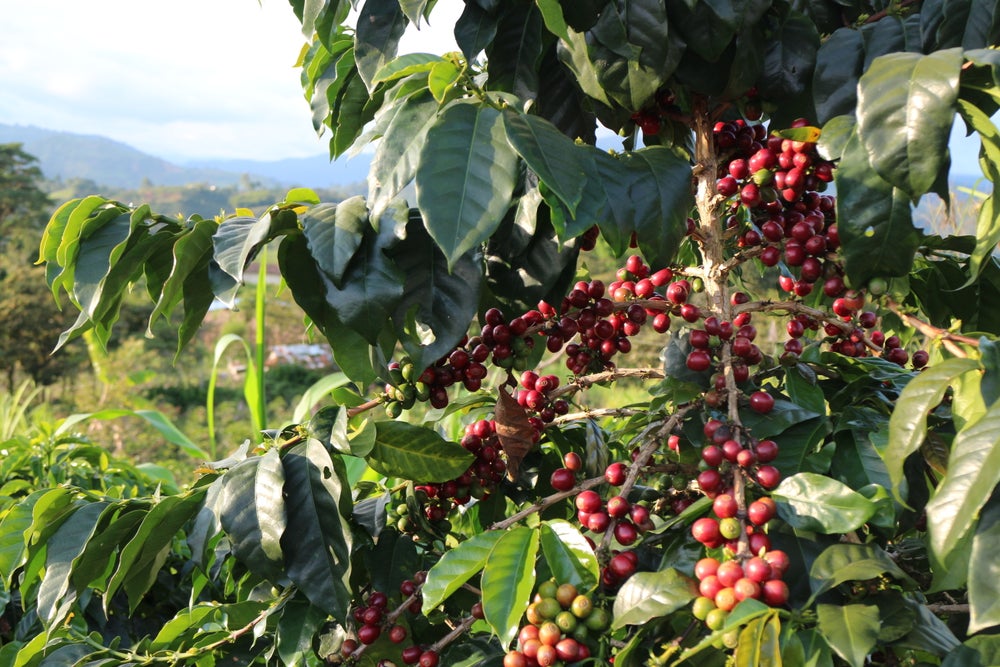
Jorge Hernando Insuasty Ortiz cultivates coffee at his farm, Finca Madrigal. Finca Madrigal sits at 1,900 meters above sea level. The high altitude creates the warm days and cool nights that help grow dense, sweet cherry. Cooler weather helps minimize the occurrence of pests and diseases, which also limits the quantity of pesticide needed.
Harvest & Post-Harvest
Cherry is selectively handpicked and only ripe, red cherry is processed. Jorge processes cherry at his on-site wet mill. Cherry is floated and pulped. Coffee is fermented for about 26 hours and then washed in clean water. Following fermentation, parchment is laid on clean patios to sundry. Parchment is raked frequently to ensure even drying. It takes approximately 8 days for parchment to dry.
About Cauca
Alongside Nariño and Huila, Cauca is becoming part of the “New Coffee Triangle.” Named after the Eje Cafetero, the region that was once the heart of Colombia’s coffee production, this New Coffee Triangle takes advantage of the high altitudes from the Andes Mountains and water-rich drainage basins that abound in the region.
In Cauca, most coffee is grown in small plots by rural and largely indigenous communities. More than 90,000 families cultivate approximately 93,000 hectares of coffee across Cauca. The most common varieties are Castillo, Colombia, Caturra, Typica, Bourbon and Tabí.
Like Nariño and Huila, Cauca is emerging from a long history of armed conflict and drug smuggling, which isolated the region and made it difficult to maintain coffee traceability.
Coffee in Colombia
Colombia has been producing and exporting coffee renowned for their full body, bright acidity and rich aftertaste, since the early 19th century.
Colombia boasts a wide range of climates and geographic conditions that produce their own unique flavors in coffee. This also means that harvest times can vary quite a bit. In fact, between all its different regions, Colombia produces fresh crop nearly all year round.
The increasing focus on the specialty industry is changing the way traders and farmers do business. It is becoming more common for farmers to isolate the highest quality beans in their lots to market separately. These higher-quality lots are often sold under specific brands or stories.
Besides its wide variety of cup profiles, Colombia has quickly expanded its certification options over the past 10 years. The most common certifications available are Fairtrade, Rainforest Alliance and Organic.