
About This Coffee
Dr. Enrique Ferrufino, a surgeon by trade, was born and raised on a coffee farm in the mountains of Matagalpa. Together with his wife Silvia, a pediatrician, the Ferrufino family decided to go into the coffee business in 1992 and bought Finca Aurora in 2004. They inspired a love of coffee in their three children from a very early age. Since they acquired Finca Aurora, the whole family has worked together to produce great coffee.
One of the core values of the business is to inspire people through coffee. Throughout the years they have invested in providing workers with fair wages, safe living conditions, health services, food and education. They also work with smaller producers in the area to help them improve their farming practices.
Cultivation
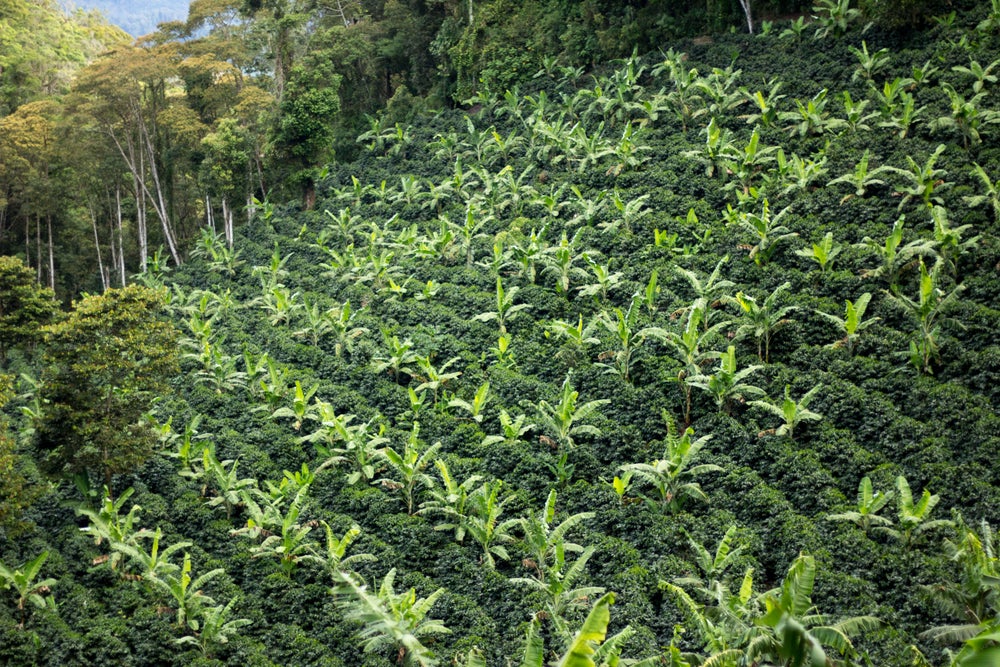
Preserving nature is a top priority for the Ferrufino family. They only use renewable energy and work diligently on conserving water resources and natural habitats. The farm houses a variety of native trees, home to many species of birds and wildlife. These trees also provide the plantation with shade and fertilize the soils with organic matter, which protects the land from erosion, droughts, and floods.
This coffee is Rainforest Alliance Certified, meaning that the coffee has been cultivated using methods that seek to maintain biodiversity and rich ecosystems.
Java Enano (‘dwarf’ Java) is a natural mutation of Javanica/Java Grande. Its smaller, more robust trees have higher yields with juicier cherry and smaller beans but with the flavor profile of Javanica.
Harvest & Post-Harvest
A unique Kombucha processing method uses black tea kombucha and SCOBY (the microbial starter for kombucha) to instill unique flavors into this Java Enano lot. Cherry is selectively handpicked and processed on the farm. Ripe, red cherry is floated to remove under ripes and damaged cherry and then pulped.
Coffee is placed in a tank with black tea and a blended SCOBY. A new SCOBY will begin to form (it typically looks like a thick skin of clear jelly) on top of the fermenting coffee after about 2 days. The microbes in the SCOBY will consume sugars and release acids and flavor compounds into the fermenting coffee. Employees carefully monitor pH, temperature and brix level during fermentation. Coffee is removed when the pH reaches 3.6.
Following fermentation, parchment is washed in clean water and laid on raised beds to dry for 22 days and then rested for 11 weeks before hulling. Both dry parchment and green coffee are stored in Ecotact bags to preserve their quality.
Finca Aurora is one of the first farms in Nicaragua with a fully integrated coffee operation on-site. They produce, wash and dry the coffee at the farm. The coffee is milled, sorted and bagged at Beneficio Finca Aurora under the watchful eye of the farm’s team. This allows full control over the quality throughout the process.
Rainforest Alliance
RFA stands for Rainforest Alliance, a certification system that emphasizes climate-smart agriculture. RFA farms have at least 40% of land covered by canopy, significant species diversity (at least 12 native tree species per hectare, on average) and a system of natural vegetation buffers between agricultural land and bodies of water. The farms also use organic fertilizers.
About Java
Java is a high-quality variety common to Central America. Its high disease tolerance and low fertilizer requirement makes it a great choice for smallholder farmers focused on specialty production. Descended from the Ethiopian landrace variety, Abyssinia, the Dutch introduced the variety to the Indonesian island of Java in the early 19th century. The cup quality can rival Geisha yet is easier to cultivate and more disease resistant as well.
Coffee in Nicaragua
Nicaragua may not be the most famous producer of Central American coffee, but it has great potential. The country is known as the land of ‘los lagos y los volcanes’ (lakes and volcanos) and has many coffee growing ‘pockets’ that few have heard of or experienced. Many producers in the country are experimenting with new varieties and processing methods, making it a specialty origin to watch.
Many coffee producers in Nicaragua today are buoyed by cooperatives that provide a wide array of services, supports and opportunity. As seen in the win of the ‘El Acuerdo de las Tunas’, where 3,000 landless workers won land rights, collective action by farmers can be far more effective at enacting widespread change than the advocacy of individual farmers.
Cooperatives and farmer associations in Nicaragua encompass a large percentage of the country’s coffee producers, and they are taking their destiny in their own hands. By putting great emphasis on quality and by aiming for the international specialty coffee industry, cooperatives and farmers associations are helping their members gain influence and import that will, hopefully, garner enough profit to enable farmers to continue to improve and invest in their farms and their families.
Large and medium-sized (10+ hectare) farms also hold a significant place in Nicaragua’s coffee landscape, as well. Many of these farms have also prioritized social and environmental issues and are working on quality improvements at both cultivation and post-harvest levels.
Farmers, for the most part, will process coffee on their own farms, and the majority of the time coffee is dried on large drying patios under sun.